
NOTE
How to Invest in Funds
English translation of the original VNote “How to Invest in Funds”, preserving its structure with only necessary small corrections.
This is a historical learning note and may contain outdated or incomplete understanding.
Note: The original VNote structure and historical views are preserved. Product rules, returns, policies, and specific assets are time-sensitive; only clear errors or changed institutional rules are corrected minimally. This is not investment advice.
Historical screening rules: the fund-size thresholds, manager-tenure rules, institutional-holding percentages, regular-investment dates, and fixed take-profit levels on this page are heuristics recorded in the original note, not universally valid hard rules.
1. Keep a Stable Mindset
2. Funds the Original Note Says Not to Buy
The note warned against buying funds characterized by crowded holdings + high industry momentum + exceptionally strong recent performance. Its reasoning was that fund companies may operate an internal “horse-racing” mechanism, with one manager in each track; a manager promoted after strong performance may not repeat it the next year.
3. Selecting Funds
3.1. Money-Market Funds
3.1.1. Initial Screening on Morningstar
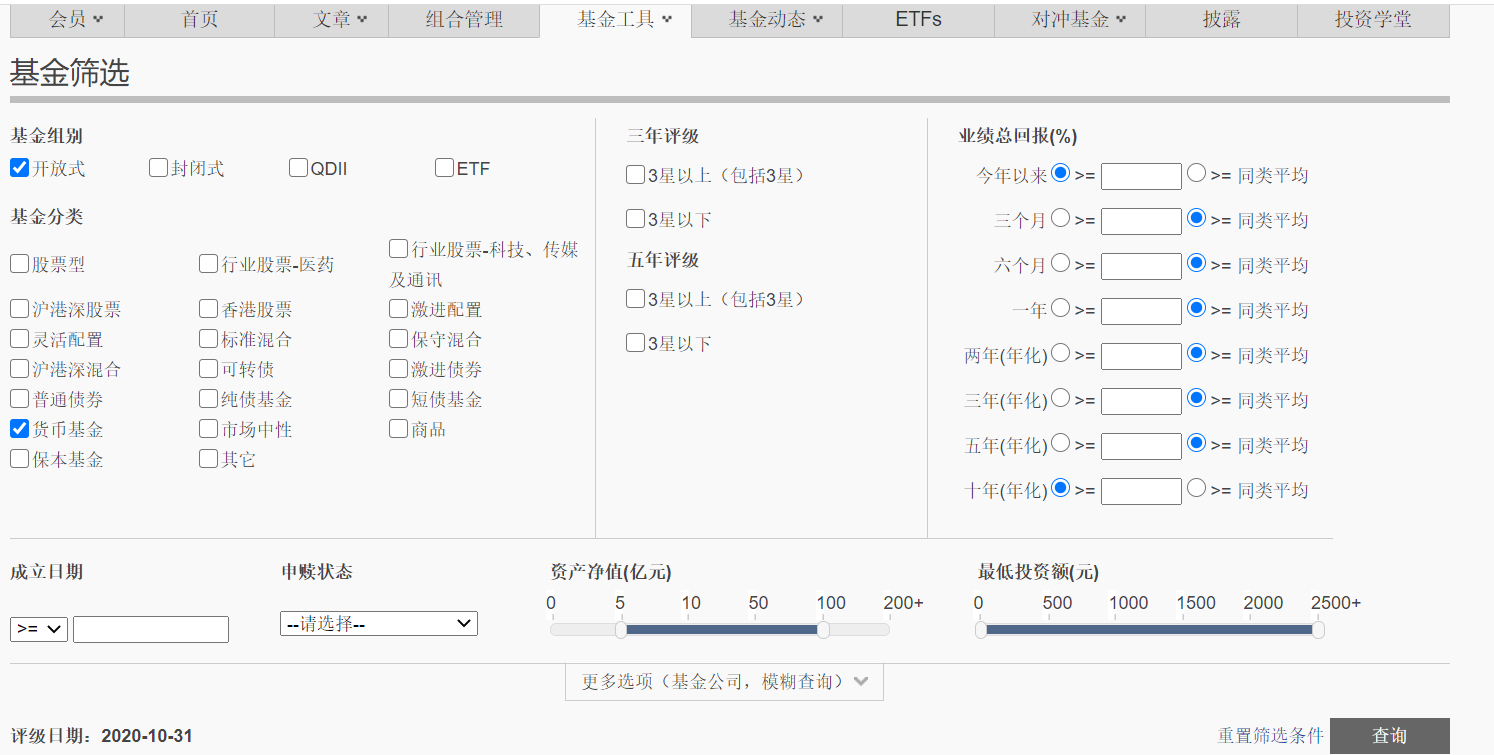
3.1.2. Further Screening by Parameters
- Principal sufficiently safe
- Fund-company size: the original note preferred companies managing more than 100 billion yuan.
- Money-fund size: larger money funds may have advantages, but very large size can also affect efficiency.
- Fund age: the original note preferred longer-established funds, generally 3-5 years or more.
- Relatively higher return
- Do not look only at one point in time; look at longer-term returns.
- Low fees and convenient withdrawal
- The note observed that subscription, redemption, management, and custody fee differences among money funds were relatively small.
- The original note recorded T+1 confirmation for buying and selling; actual confirmation and cash-arrival timing should follow the latest rules of the specific fund.
3.2. Index Funds
3.2.1. Choose an Index
- All indexes can be looked up at China Securities Index.
- Principles recorded in the note
- Breadth
- The more stocks covered and the broader the screening criteria, the broader the index.
- Examples: CSI 300, CSI 500, S&P 500.
- Industry exposure
- Defense, healthcare, etc.
- Degree of subjectivity
- Whether the index reflects the intended trend well.
- Breadth
3.2.2. Screen for an Undervalued Index
- Understand valuation indicators.
- “Paper-Folding” Method
- Determine a reasonable valuation line.
- Time: a full bull/bear cycle, at least 7 years and preferably 10+ years in the original note.
- Method: average.
- References: Lixinger Index Valuation and Danjuan Index Valuation (2020-10-23).
- Define undervalued, reasonable, and overvalued zones.
- Correspond to buy, hold, and sell timing in the historical strategy.
- Example from the note: A-share low valuation set at 20% and high valuation at 40%. If an index P/E is 10, buy below
10 * (1 - 20%) = 8and sell above10 * (1 + 40%) = 14. - These fixed percentages are historical heuristics, not universal valuation boundaries.
- Determine a reasonable valuation line.
3.2.3. Choose the Index Fund with the Smallest Tracking Error
- Tracking error
- Average absolute daily tracking deviation.
- Annualized tracking error.
3.3. Bond Funds
- Screen by historical performance.
- Current manager tenure above 3 years in the historical rule.
- The note assumed one bond bull/bear cycle was around three years and preferred managers who had experienced a full cycle.
- Fund size above 1 billion yuan.
- The note reasoned that very small funds can be affected more by large redemptions, especially during bond-market declines.
- Institutional ownership between 30% and 70%.
- Too little institutional interest was viewed negatively, while too much could create large-redemption risk.
- Current manager tenure above 3 years in the historical rule.
- Compare return and risk: higher return and lower drawdown were preferred, using a return/drawdown ratio = annualized return over a period ÷ maximum drawdown over that period.
3.3.1. Initial Screening on Morningstar
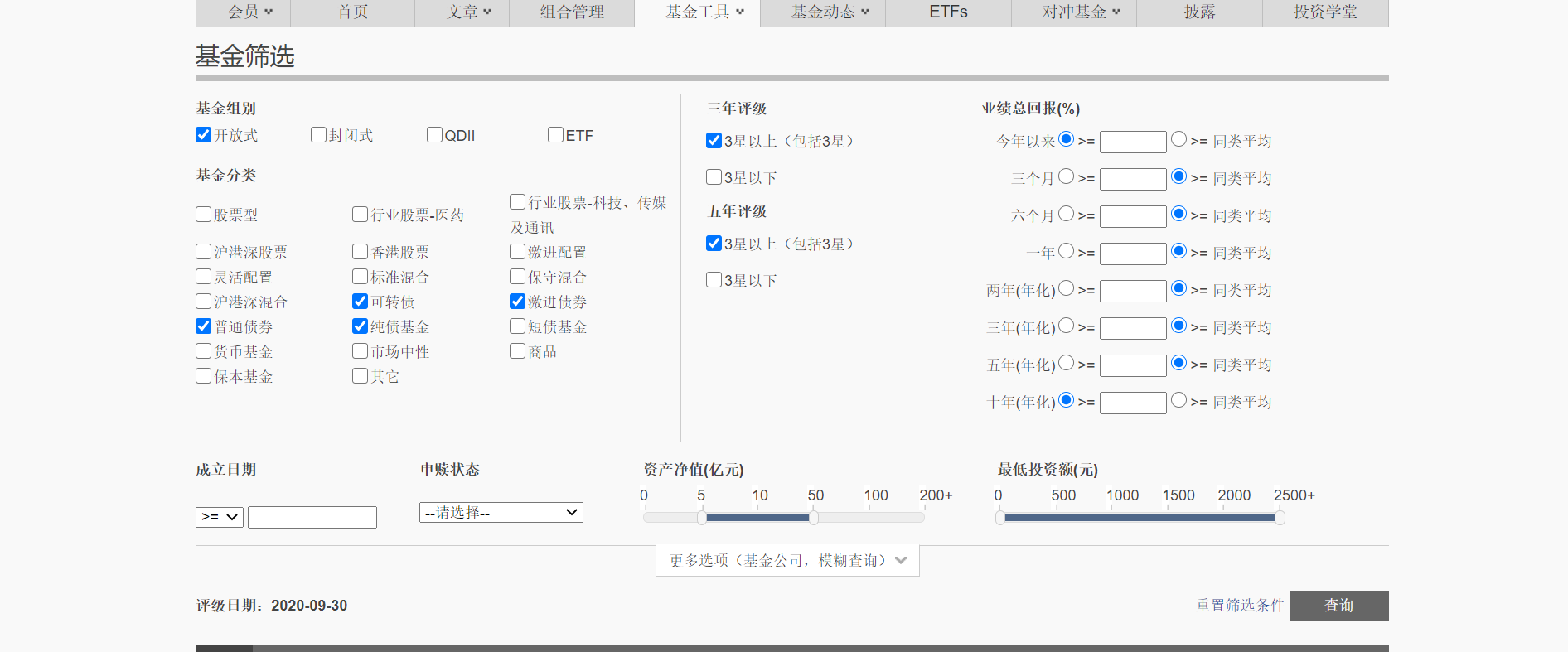
- Select fund type
- Open-ended
- Convertible-bond, aggressive bond, ordinary bond, pure bond, etc.
- Fund size
- 500 million to 5 billion yuan in the historical screen.
- Performance above peer average
- 3 months, 6 months, 1 year, 2 years, 3 years, 5 years.
3.3.2. Compare Selected Funds by Parameters
- Stability of results
- Lower standard deviation and beta were preferred in the historical screen.
- Strength of performance
- Higher alpha.
- Risk-adjusted performance
- Higher Sharpe ratio.
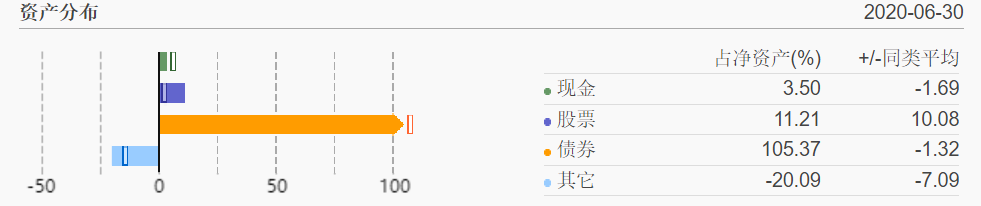
- Bond-fund leverage
- If the fund holds bonds above 100% of net assets, it is using leverage/repo financing.
- Current fund-manager capability
- Tenure
- Composite ratings: Eastmoney, Howbuy
- Overall fund-company strength
3.3.3. Review Regularly and Update
3.4. Active Funds
3.4.1. Method One
3.4.1.1. Initial Screening on Morningstar
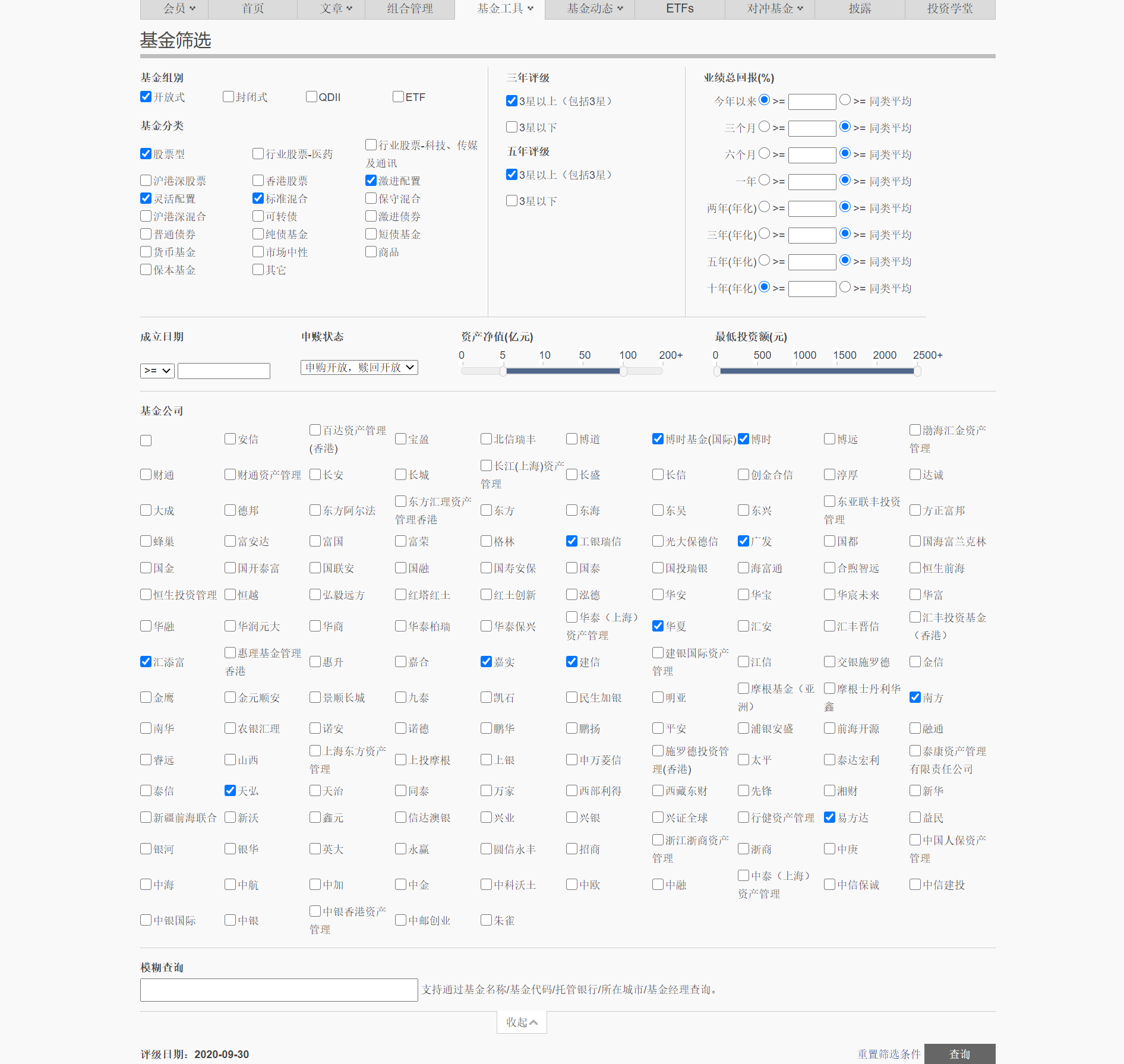
- Fund type
- Open-ended
- LOF, active management, mixed, etc.
- Fund size
- 500 million to 10 billion yuan in the historical rule.
- Performance above peer average
- 3 months, 6 months, 1 year, 2 years, 3 years, 5 years.
3.4.1.2. Compare Selected Funds by Parameters
- Stability
- Lower standard deviation and beta.
- Ability to produce strong results
- Higher alpha.
- Risk-adjusted ability
- Higher Sharpe ratio.
- Current manager
- Tenure
- Composite ratings: Eastmoney, Howbuy
- Fund holdings
- Lower top-10 concentration was interpreted as more diversified.
- Avoid excessive overlap among funds.
3.4.1.3. Review and Replace Regularly
- Whether return/risk remains near the top
- Repeat screening.
- Whether the manager changed.
- Replace funds with large changes.
3.4.2. Method Two
3.4.2.1. Choose Strong Fund Managers
3.4.2.2. Research Fund Reports
4. Buying Strategy
4.1. Regular Investing
4.1.1. Why Use Regular Investing?
- The original note describes the A-share market as historically characterized by short bull markets and longer volatile/bear periods. Regular investing can buy more units at lower prices and average the cost basis.
Regular Investing vs. Lump-Sum Investing
If the market falls first and later rises, regular investing can look better; if it rises first and later falls, lump-sum investing can look better in the simplified examples.
Is Regular Investing Better Than Lump-Sum Buy-and-Hold? - Xueqiu
4.1.2. Timing Purchases
- The note suggests avoiding starting regular investment late in a bull market or when valuation is very high.
- Monthly or weekly investing can both work; exact date was considered less important.
- For weekly investing, Monday, Thursday, or Friday were all viewed as acceptable.
- For monthly investing, the note suggested avoiding mid-month.
4.1.3. If You Already Have a Lump Sum, How to Enter?
- Initially place money in relatively safer products such as money-market or bond funds in the historical plan.
- Divide the money into multiple parts and deploy them over time together with monthly contributions.
- Invest spare money.
monthly spare money = (monthly income - monthly expenses) / 2monthly regular-investment amount = (savings / 20) * risk coefficientrisk coefficient = (100 - current age)%– an historical heuristic from the original note; age alone cannot determine the appropriate risky-asset allocation.
5. Selling Strategy
5.1. Conservative Redemption
- Original rule: if annualized return > 10%, redeem principal. A fixed take-profit threshold is not universally applicable.
- Original rule: if annualized return > 20%, redeem all. A fixed take-profit threshold is not universally applicable.
5.2. Aggressive Redemption
- Redeem half at a somewhat lower take-profit point.
- Redeem the other half later.
6. Why Fund Investors Lose Money
Not researching fund holdings.
7. When to Cut a Fund Position
When it underperforms its performance benchmark, according to the original rule.
8. How Many Funds to Hold
- The note cites a Morningstar study suggesting seven and says to adjust to personal circumstances.
- At most one fund per manager, because funds run by the same manager may hold very similar portfolios.
- Prefer at most one fund from a company/strategy group when holdings overlap heavily.
- The historical note suggested 3-5 funds to spread manager-specific mistakes.
9. New Funds vs. Old Funds
- New funds have an offering period and a portfolio-building period. During these periods, exposure and returns differ from a fully invested mature fund.
- Offering period: historically recorded as about one week to one month.
- Portfolio-building period: from about one month up to six months in the historical note, as positions are raised toward contractual targets.
- The note recorded that new-fund initial-subscription fees were often less discounted while existing-fund subscription fees could be discounted through sales channels. Therefore the original note concluded there was no need to chase new funds simply because they were new.