
NOTE
Fund Classification
English translation of the original VNote “Fund Classification”, preserving its structure with only necessary small corrections.
This is a historical learning note and may contain outdated or incomplete understanding.
Note: The original VNote structure and historical views are preserved. Product rules, returns, policies, and specific assets are time-sensitive; only clear errors or changed institutional rules are corrected minimally. This is not investment advice.
1.1. Classification Criteria
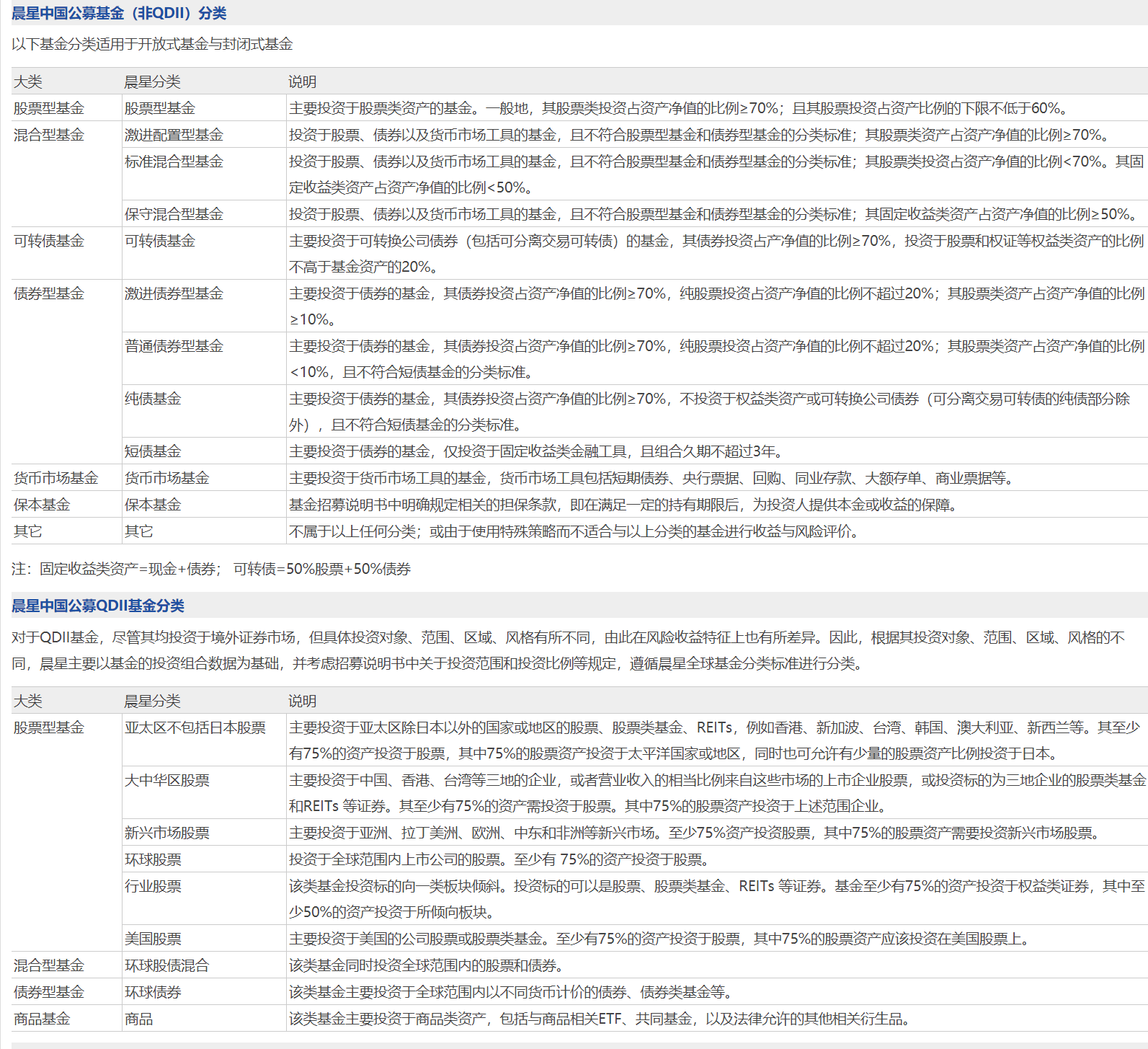
- By whether units can be added/redeemed: open-ended and closed-end.
- By investment target: equity, mixed, bond, money-market.
- By investment style: growth, value, balanced.
- By investment region: domestic, QDII, Hong Kong mutual-recognition funds.
- By management style: passive and active.
- By whether bought directly through the fund-company/subscription-redemption channel or traded on exchange: off-exchange and exchange-traded.
1.2. Investment-Style Classification
- Comparing a fund’s daily movement with the CSI 300, ChiNext, and historically the SME-board-related indexes can give a rough indication of its current portfolio style. The Shenzhen Main Board and SME Board were merged in 2021, so related index names and classifications have changed.
- If fund behavior is closer to ChiNext or former SME-board-related indexes, the note interprets it as more growth-oriented.
- If behavior is closer to the CSI 300, the note interprets it as more value-oriented. It suggests comparing on days when those indexes diverge significantly.
1.2.1. Growth Fund
- Generally a fund investing mainly in growth stocks.
- Growth stocks are companies still in a high-growth stage.
1.2.2. Value Fund
- A fund with a basic objective of seeking stable medium/long-term returns in the original note.
- The note describes holdings such as large-cap blue chips, corporate bonds, and government bonds, with greater emphasis on risk control and stable appreciation.
1.2.3. Balanced Fund
- Invests in both value and growth stocks and across multiple industries to seek moderate risk.
1.3. Classification by Investment Target
1.3.1. Money-Market Fund
- Invests specifically in relatively low-risk money-market instruments.
- Money-market instruments: short-term debt instruments, such as government bills, central-bank bills, commercial paper, bank deposits, interbank deposits, etc.
- Return: the original note recorded annualized returns around 2-3%; actual returns vary with money-market rates and are not fixed.
- 7-day annualized yield: annualized based on recent seven-day income.
- Income per 10,000 units: income generated by 10,000 units on that day.
- The original note observed higher month/quarter/year-end rates and referenced SHIBOR.
- Liquidity: the original note recorded T+0; subscription, fast-redemption, and settlement rules vary by product.
- Risk: generally a lower-risk fund category, but it is not a bank deposit and does not guarantee principal or return.
1.3.1.1. Exchange-Traded Money-Fund Arbitrage
- Money-market funds that can be traded on exchange.
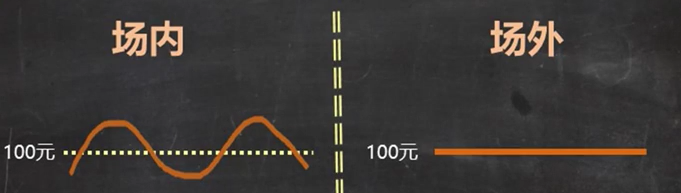
- The note describes buying when exchange price is below 100 and redeeming through the primary channel to capture a price gap.
- Return: exchange/off-exchange price difference * units.
- Risk: not zero; convergence failure, liquidity, transaction costs, subscription/redemption limits, and rule changes can all matter.
- Liquidity: the original note recorded T+0.
- Method
- Choose the right fund
- Supports exchange trading and primary-market subscription/redemption.
- Historical T+0 requirement in the strategy.
- Large size and liquidity.
- Historical examples: Hwabao Tianyi, Yinhua Rili.
- Choose the right broker
- The historical note required the broker to be an authorized participant/primary dealer for the fund.
- Choose the right fund
1.3.2. Bond Funds
1.3.2.1. What They Are
- At least 80% invested in bonds under the fund-classification rule; some types may also hold equities or other permitted assets.
- Bonds: government, financial, enterprise/corporate bonds.
1.3.2.2. Investment Scope
By scope, the note divides them into pure bond and mixed bond funds. Bonds
- Pure bond
- Invests in bonds rather than stocks.
- Mixed bond
- Bonds + stocks or other permitted risk assets, depending on product category.
- Historical classification includes primary bond funds, secondary bond funds, and convertible-bond funds.
- The original note records that old primary bond funds could participate in primary-market new-share subscriptions; that practice was later stopped, while convertible bonds remained possible under product rules.
- Secondary bond funds can invest in bonds and a limited share of equities under product rules.
- Convertible-bond funds focus on convertible bonds, with the fund contract defining the required allocation.
1.3.2.3. Liquidity / Duration
The note divides short-duration and medium/long-duration bond funds by maturity/duration.
1.3.2.4. Return and Risk
- Higher potential return than money-market funds in the note, with somewhat higher risk.
- Other things equal, longer-duration bonds are generally more sensitive to interest-rate changes; total risk for short- and long-duration bonds also depends on credit quality and liquidity.
Liquidity Risk of Bond Funds
The note discusses monetary tightening and rising rates: when current yields rise, older lower-yield bonds fall in price.
Silicon Valley Bank Failure: Are Bank Deposits Still Safe? Why Did Bank Wealth-Management Products Fall in November 2022? - Zhihu
1.3.3. Equity Funds
- At least 80% invested in stocks under the applicable classification rule.
- By direction: consumer, healthcare, defense, etc.
- By style
- Large-cap, mid-cap, small-cap
- Value, growth, balanced
1.3.4. Mixed Funds
- Can invest in stocks, bonds, money-market instruments, etc.
- The original note further classified them by stock/bond proportions:
- Equity-biased: 50%-70% stocks
- Bond-biased: 50%-70% bonds
- Balanced stock/bond: roughly 40%-60%
- These percentage labels are historical classification heuristics; actual fund classification and limits depend on current regulation and fund contracts.
1.4. Primary vs. Secondary-Market Classification
- “On-exchange” generally refers to exchange trading.
1.4.1. Off-Exchange Funds
- Purchased through the primary subscription/redemption channel rather than exchange trading.
- Investors subscribe/redeem according to the fund’s rules.
1.4.2. Exchange-Traded Funds
- Bought and sold in the secondary market, often from other investors through a securities exchange.
- Types
- LOF: Listed Open-Ended Fund
- Off-exchange subscription/redemption + exchange trading.
- ETF: Exchange-Traded Fund. Traditional ETFs overwhelmingly used index-tracking strategies; since 2026, Shanghai and Shenzhen exchanges have introduced active ETF rules, so ETF no longer means “necessarily passive index tracking.”
- Exchange trading + primary-market subscription/redemption, with mechanisms depending on product rules.
- Graded funds
- Closed-end funds
- LOF: Listed Open-Ended Fund
1.4.3. On-Exchange vs. Off-Exchange
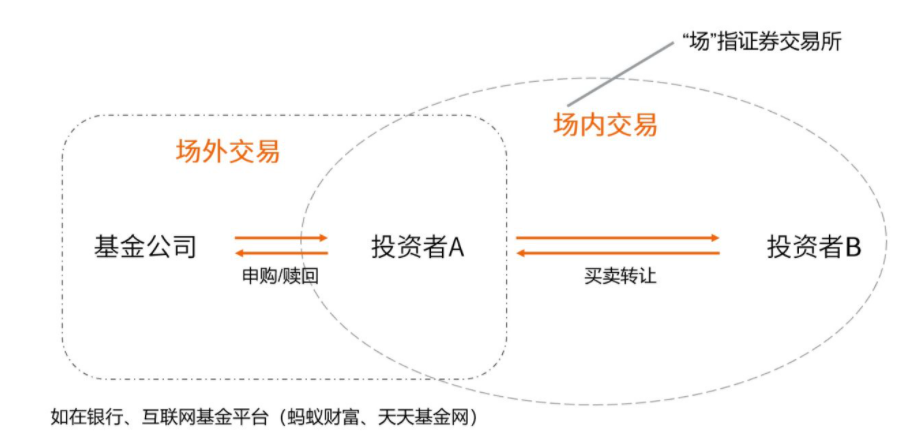
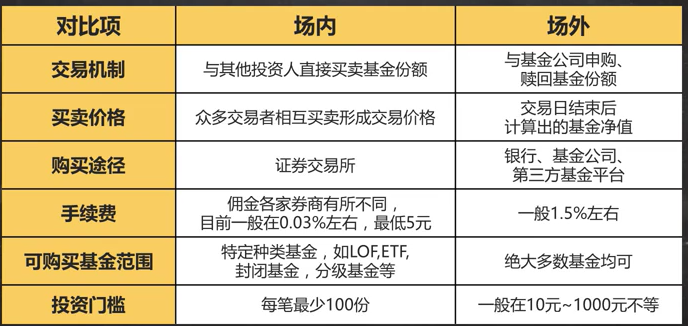
- Exchange-traded funds can trade at a premium/discount because they trade in the secondary market.
- Exchange prices are real-time; off-exchange subscription/redemption prices are commonly based on NAV under the product’s cutoff rules.
- The original note summarized settlement as “on-exchange T+1, off-exchange T+2”; actual trading, subscription/redemption, and cash-arrival rules vary by fund type, market, and product.
1.5. Management-Style Classification
1.5.1. Active
1.5.2. Passive (Index)
1.5.2.1. What Is an Index?
- An indicator describing the overall price-level change of a stock market or market segment.
- For example, a 2% rise in the CSI 300 means the weighted index rose 2%, not that every constituent rose 2%.
- In simple terms, representative stocks are selected and combined using an index methodology.
1.5.2.2. Classification
1.5.2.2.1. ETF
- Exchange-Traded Open-Ended Fund
- Exchange-traded: listed and traded on a securities exchange.
- Open-ended: supports subscription/redemption under product rules.
- Traditional ETFs often track indexes; active ETFs also exist under 2026 rules, so ETF is not necessarily passive.
1.5.2.2.2. LOF
- Listed, open-ended.
- Listed: can trade on a securities exchange.
- Open-ended: can subscribe/redeem under fund rules.
- Can be active or passive.
1.5.2.2.3. ETF vs. LOF
- Subscription/redemption consideration differs.
- Traditional ETFs commonly use in-kind baskets, while LOFs commonly use cash; exact mechanisms depend on the product.
- LOF subscription thresholds can be lower.
- The original note recorded higher ETF primary-market thresholds and lower LOF thresholds; current minimums depend on the product.
- Subscription/redemption venue differs.
- ETF primary-market creation/redemption is handled through exchange-related mechanisms; LOF can have both on- and off-exchange channels.
1.5.2.2.4. Graded Funds
A historical product type in mainland China; public-fund graded-fund restructuring/termination has changed this market significantly.
1.6. Classification by Investment Region
1.6.1. QDII Funds
1.6.1.1. Why They Exist
- The original note explained QDII partly through individuals’ annual convenient foreign-exchange quota. More accurately, QDII operates within China’s capital-account management and institutional quota framework, allowing qualified domestic institutions to raise domestic funds and invest abroad.
1.6.1.2. What It Is
- Qualified Domestic Institutional Investor.
- Holding such a fund gives investors indirect exposure to overseas assets and overseas asset allocation.
1.6.1.3. Types
- QDII equity: historical examples such as ICBC Credit Suisse Global Allocation or GF Nasdaq Index.
- QDII bond: historical example such as ICBC Credit Suisse Global USD Bond.
- QDII mixed: historical example such as Huatai-PineBridge Asia Enterprise.
- QDII alternatives: historical examples such as E Fund Gold Theme or Penghua US Real Estate.
1.6.1.4. Characteristics
1.6.1.4.1. Advantages
- Richer investment universe.
- Reduces dependence on a single market.
1.6.1.4.2. Disadvantages
- Exchange-rate risk (two-edged).
- Generally higher fees.
- Longer subscription/redemption settlement times.