NOTE
5.4 Hashtable
1. 是什么 线程安全的hashmap 2. 如何使用 3. 原理分析 3.1. uml 可克隆,可序列化,实现了Map接口 3.2. 构造方法 使用链地址法(单链表)解决Hash冲突 初始化容量为11,默认的加载因子为0.75 3.3. put方法 3.3.1. 使用synchronized加锁
这是历史学习笔记,可能存在过时或不完整的理解。
1. 是什么
线程安全的hashmap
2. 如何使用
public class HashtableTest
{
    public static void main(String[] args) throws InterruptedException
    {
        Hashtable<Integer, Integer> map = new Hashtable<>();
        Thread thread1 = new Thread(()->{
            for (int i = 0; i < 100000; i++)
            {
                map.put(i, i);
            }
        });

        Thread thread2 = new Thread(()->{
            for (int i = 100000; i < 200000; i++)
            {
                map.put(i, i);
            }
        });

        thread1.start();
        thread2.start();
        thread1.join();
        thread2.join();
        System.out.println(map);
        System.out.println(map.size());
        for (int i = 0; i < 200000; i++)
        {
            if (!map.contains(i))
            {
                throw new RuntimeException("并发put有问题");//不会抛出异常说明并发put没问题
            }
            System.out.println(map.remove(i));
        }
    }
}
3. 原理分析
3.1. uml
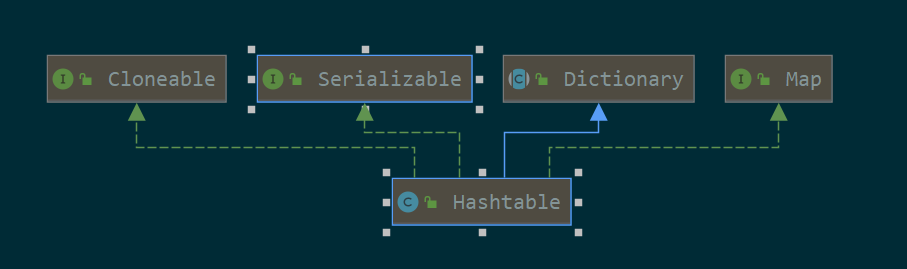
可克隆,可序列化,实现了Map接口
3.2. 构造方法
使用链地址法(单链表)解决Hash冲突 初始化容量为11,默认的加载因子为0.75
public class Hashtable<K,V>
    extends Dictionary<K,V>
    implements Map<K,V>, Cloneable, java.io.Serializable {

    //使用Entry数组实现
    private transient Entry<?,?>[] table;

    //map中实际元素的个数
    private transient int count;

    //以下两个决定了什么时候扩容
    private int threshold;
    private float loadFactor;

    private transient int modCount = 0;

    public Hashtable() {
    	//初始化容量为11,加载因子为0.75
        this(11, 0.75f);
    }

    public Hashtable(int initialCapacity, float loadFactor) {
        //检查参数合法
        if (initialCapacity < 0)
            throw new IllegalArgumentException("Illegal Capacity: "+
                                               initialCapacity);
        if (loadFactor <= 0 || Float.isNaN(loadFactor))
            throw new IllegalArgumentException("Illegal Load: "+loadFactor);

        if (initialCapacity==0)
            initialCapacity = 1;
        this.loadFactor = loadFactor;
        //创建table数组
        table = new Entry<?,?>[initialCapacity];
        //threshold取int MAX_ARRAY_SIZE = Integer.MAX_VALUE  8和initialCapacity * loadFactor中的小者
        threshold = (int)Math.min(initialCapacity * loadFactor, MAX_ARRAY_SIZE + 1);
    }
}
3.3. put方法
//加了synchronized
public synchronized V put(K key, V value) {
    // Make sure the value is not null
    //与HashMap不同,这里value不能为null
    if (value == null) {
        throw new NullPointerException();
    }

    // Makes sure the key is not already in the hashtable.
    Entry<?,?> tab[] = table;
    int hash = key.hashCode();
    //计算下标
    int index = (hash & 0x7FFFFFFF) % tab.length;
    @SuppressWarnings("unchecked")
    Entry<K,V> entry = (Entry<K,V>)tab[index];
    //遍历链表直到找到相等的节点或者到末尾
    for(; entry != null ; entry = entry.next) {
    	//找到了,替换value
        if ((entry.hash == hash) && entry.key.equals(key)) {
            V old = entry.value;
            entry.value = value;
            return old;
        }
    }

	//没有找到,新建节点加入链表
    addEntry(hash, key, value, index);
    return null;
}
3.3.1. 使用synchronized加锁
public synchronized V put(K key, V value) {
//...
}
3.3.2. 计算key落在entry数组中的哪个位置【或者说哪个链表】
Entry<?,?> tab[] = table;
int hash = key.hashCode();
//计算下标
//计算index是通过对数组长度取模而不是使用与操作
int index = (hash & 0x7FFFFFFF) % tab.length;
@SuppressWarnings("unchecked")
Entry<K,V> entry = (Entry<K,V>)tab[index];
3.3.3. 遍历链表直到找到相等的节点或者到末尾
//遍历链表直到找到相等的节点或者到末尾
for(; entry != null ; entry = entry.next) {
	//找到了,替换value
    if ((entry.hash == hash) && entry.key.equals(key)) {
        V old = entry.value;
        entry.value = value;
        return old;
    }
}
3.3.4. 没有找到,新建节点加入链表头部
- addEntry方法
private void addEntry(int hash, K key, V value, int index) {
    modCount++;

    Entry<?,?> tab[] = table;
    //判断是否需要扩容
    if (count >= threshold) {
        // Rehash the table if the threshold is exceeded
        rehash();

        tab = table;
        hash = key.hashCode();
        index = (hash & 0x7FFFFFFF) % tab.length;
    }

    // Creates the new entry.
    @SuppressWarnings("unchecked")
    Entry<K,V> e = (Entry<K,V>) tab[index];
    //新建节点并且直接放入数组相应位置
    tab[index] = new Entry<>(hash, key, value, e);
    count++;
}
3.3.4.1. 扩容
- rehash方法
@SuppressWarnings("unchecked")
protected void rehash() {
    int oldCapacity = table.length;
    Entry<?,?>[] oldMap = table;

    // overflowconscious code
    //新capacity=旧capacity*2+1
    int newCapacity = (oldCapacity << 1) + 1;
    //如果容量超过了MAX_ARRAY_SIZE(int MAX_ARRAY_SIZE = Integer.MAX_VALUE  8),那么以MAX_ARRAY_SIZE为准
    if (newCapacity  MAX_ARRAY_SIZE > 0) {
        if (oldCapacity == MAX_ARRAY_SIZE)
            // Keep running with MAX_ARRAY_SIZE buckets
            return;
        newCapacity = MAX_ARRAY_SIZE;
    }
    //以新capacity创建新数组
    Entry<?,?>[] newMap = new Entry<?,?>[newCapacity];

    modCount++;
    threshold = (int)Math.min(newCapacity * loadFactor, MAX_ARRAY_SIZE + 1);
    table = newMap;
	//由后往前遍历entry数组
    for (int i = oldCapacity ; i > 0 ;) {
    	//从头到尾遍历链表
        for (Entry<K,V> old = (Entry<K,V>)oldMap[i] ; old != null ; ) {
        	//e表示此次要迁移的节点,old表示下一个要迁移的节点
            Entry<K,V> e = old;
            old = old.next;

			//计算e在新entry数组中的位置
            int index = (e.hash & 0x7FFFFFFF) % newCapacity;
            //把e的next指向新entry数组中的位置(链表的头节点)
            e.next = (Entry<K,V>)newMap[index];
            //再把新entry数组中的位置赋值为e
            //等于就是头插法
            newMap[index] = e;
        }
    }
}
3.4. get方法
//加了synchronized
public synchronized V get(Object key) {
    Entry<?,?> tab[] = table;
    int hash = key.hashCode();
    //计算在那个链表中
    int index = (hash & 0x7FFFFFFF) % tab.length;
    //遍历链表找到相等的节点
    for (Entry<?,?> e = tab[index] ; e != null ; e = e.next) {
        if ((e.hash == hash) && e.key.equals(key)) {
            return (V)e.value;
        }
    }
    return null;
}
3.4.1. 使用synchronized加锁
public synchronized V get(Object key) {
}
3.4.2. 计算key落在entry数组中的哪个位置【或者说哪个链表】
Entry<?,?> tab[] = table;
int hash = key.hashCode();
//计算在那个链表中
int index = (hash & 0x7FFFFFFF) % tab.length;
3.4.3. 遍历链表直到找到相等的节点或者到末尾
//遍历链表找到相等的节点
for (Entry<?,?> e = tab[index] ; e != null ; e = e.next) {
    if ((e.hash == hash) && e.key.equals(key)) {
        return (V)e.value;
    }
}
3.5. remove方法
使用synchronized修饰 同get方法找到节点,删除的操作就是链表节点的删除操作
public synchronized V remove(Object key) {
	Entry<?,?> tab[] = table;
	int hash = key.hashCode();
	int index = (hash & 0x7FFFFFFF) % tab.length;
	@SuppressWarnings("unchecked")
	Entry<K,V> e = (Entry<K,V>)tab[index];
	for(Entry<K,V> prev = null ; e != null ; prev = e, e = e.next) {
		if ((e.hash == hash) && e.key.equals(key)) {
		    modCount++;
		    if (prev != null) {
		    	//不是头节点
		        prev.next = e.next;
		    } else {
		    	//头节点
		        tab[index] = e.next;
		    }
		    count;
		    //help GC
		    V oldValue = e.value;
		    e.value = null;
		    return oldValue;
		}
	}
	return null;
}
3.5.1. 使用synchronized加锁
public synchronized V remove(Object key) {
}
3.5.2. 计算key落在entry数组中的哪个位置【或者说哪个链表】
Entry<?,?> tab[] = table;
int hash = key.hashCode();
int index = (hash & 0x7FFFFFFF) % tab.length;
@SuppressWarnings("unchecked")
Entry<K,V> e = (Entry<K,V>)tab[index];
3.5.3. 遍历链表直到找到相等的节点或者到末尾,把value置为null
@SuppressWarnings("unchecked")
Entry<K,V> e = (Entry<K,V>)tab[index];
for(Entry<K,V> prev = null ; e != null ; prev = e, e = e.next) {
	if ((e.hash == hash) && e.key.equals(key)) {
	    modCount++;
	    if (prev != null) {
	    	//不是头节点
	        prev.next = e.next;
	    } else {
	    	//头节点
	        tab[index] = e.next;
	    }
	    count;
	    //help GC
	    V oldValue = e.value;
	    e.value = null;
	    return oldValue;
	}
}
3.6. containsKey方法
//加了synchronized
public synchronized boolean containsKey(Object key) {
	//以下逻辑同get方法
    Entry<?,?> tab[] = table;
    int hash = key.hashCode();
    int index = (hash & 0x7FFFFFFF) % tab.length;
    for (Entry<?,?> e = tab[index] ; e != null ; e = e.next) {
        if ((e.hash == hash) && e.key.equals(key)) {
            return true;
        }
    }
    return false;
}
3.6.1. 使用synchronized加锁
public synchronized boolean containsKey(Object key) {
}
3.6.2. 计算key落在entry数组中的哪个位置【或者说哪个链表】
Entry<?,?> tab[] = table;
int hash = key.hashCode();
int index = (hash & 0x7FFFFFFF) % tab.length;
3.6.3. 遍历链表直到找到相等的节点或者到末尾
for (Entry<?,?> e = tab[index] ; e != null ; e = e.next) {
    if ((e.hash == hash) && e.key.equals(key)) {
        return true;
    }
}
return false;