
NOTE
Producer Behavior Theory
English translation of the original VNote “Producer Behavior Theory”, preserving its structure with only necessary small corrections.
This is a historical learning note and may contain outdated or incomplete understanding.
Note: The original VNote structure and wording are preserved. Only clear errors or changed definitions are corrected minimally.
1. Production
1.1. What Production Is
- Production is the activity of transforming inputs into outputs.
- Factors of production
- Labor, land, capital, technology
- Output
- Tangible products: physical goods
- Intangible products: services (tertiary sector)
- Factors of production
1.2. What a Production Function Is
- The relationship, over a given period and with technology unchanged, between the production factors used and the maximum output that can be produced.
- Formula
- Q = f(L, K, D)
- Q is output, L is labor, K is capital, D is land.
- Cobb-Douglas
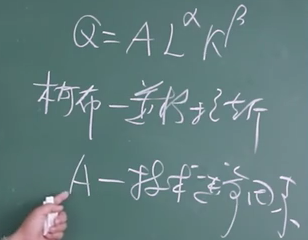
- Besides labor and capital that can be identified explicitly, the note groups other influences into A when analyzing an economy.
- Q = f(L, K, D)
1.3. Fixed and Variable Factors
- Fixed factor: a factor that does not change with output.
- Variable factor: a factor that changes with output.
- Production is divided into two types according to whether there are fixed factors:
- Short-run production: at least one factor is fixed during the period.
- Long-run production: all factors are variable during the period.
2. Short-Run Production Analysis
2.1. What It Is
- Q = f(L, K0)
- Assume capital is fixed and consider only labor.
- This is short-run production.
2.2. How to Analyze It
- Table method
- Graphical method
- Law of diminishing marginal product
2.3. Uses
2.3.1. The Rational Stage of Production
3. Long-Run Production Decisions
3.1. What It Is
- Q = f(L, K)
- Both L and K are variable.
3.2. How to Analyze It
3.2.1. Isoquant
- The locus of combinations of two factors that produce the same output.
3.2.2. Isocost Line
- With cost fixed, the locus of the maximum combinations of two factors a firm can purchase.
3.3. Uses
3.3.1. Rational Region of Production
3.3.1.1. Marginal Rate of Substitution
- Factors of production can substitute for one another; the measure describes how easy that substitution is.
3.3.2. Optimal Production Decision
3.3.2.1. Producer Equilibrium
3.3.2.2. Expansion Path
4. Returns to Scale
The original note titled this section “Economies of Scale.” The content describes how output changes when all inputs change in the same proportion, so “Returns to Scale” is the more precise term.
4.1. What It Is
- The way output changes when all factors in a production process increase by the same multiple.
4.2. Three Forms
- Increasing returns to scale
- Constant returns to scale
- Decreasing returns to scale