
NOTE
Competition and Monopoly
English translation of the original VNote “Competition and Monopoly”, preserving its structure with only necessary small corrections.
This is a historical learning note and may contain outdated or incomplete understanding.
Note: The original VNote structure and wording are preserved. Only clear errors or changed definitions are corrected minimally.
1. Market Classification
- Perfect competition
- Monopoly
- Monopolistic competition
- Oligopoly
2. Perfect Competition
2.1. Four Conditions
2.1.1. Large-Numbers Assumption
- Countless producers and consumers.
- Firms have no pricing power.
2.1.2. Product Homogeneity
- Consumers view products of the same kind as identical.
- Consumers have no need to choose among differentiated versions.
- Producers do not need to advertise.
2.1.3. Perfect Information
- Information is everywhere and public.
2.1.4. Perfect Mobility of Resources
- Only when resources can move freely can they be freely allocated.
2.2. Examples of Markets
- Securities market
- Agricultural-product market
2.3. Demand Curve
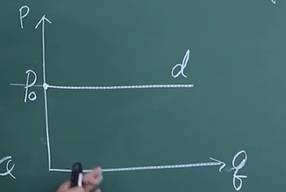
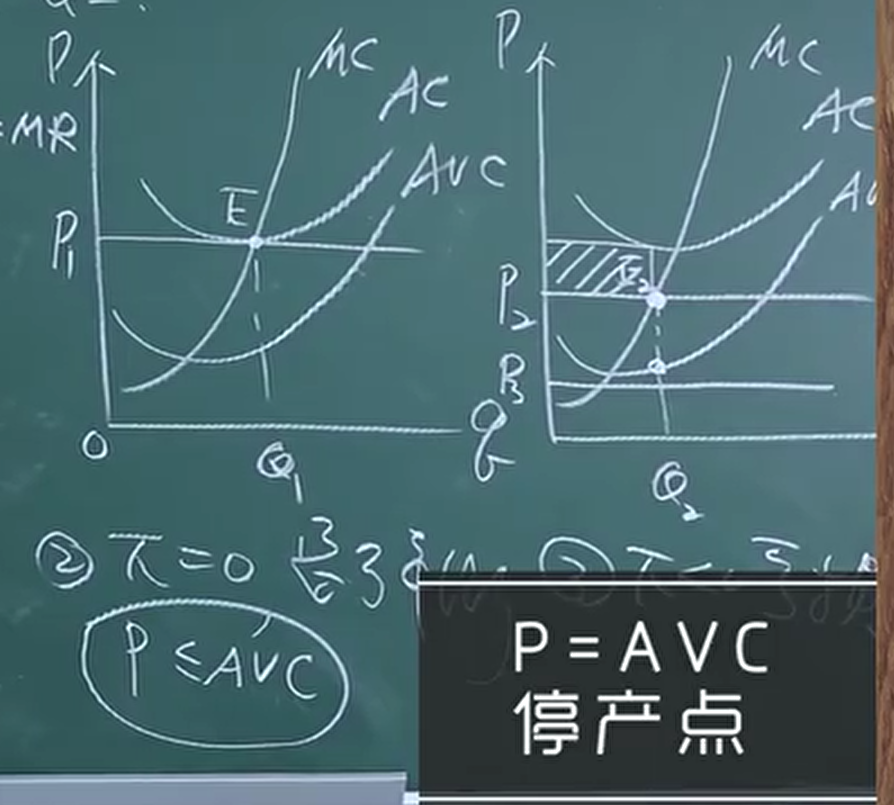
- Profit-maximizing condition for a perfectly competitive firm: P0 = MC.
2.4. Short-Run Equilibrium
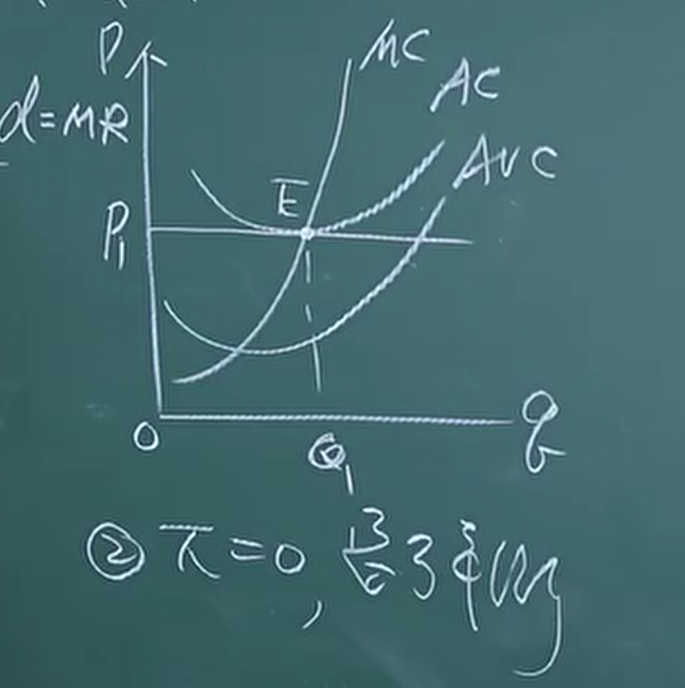
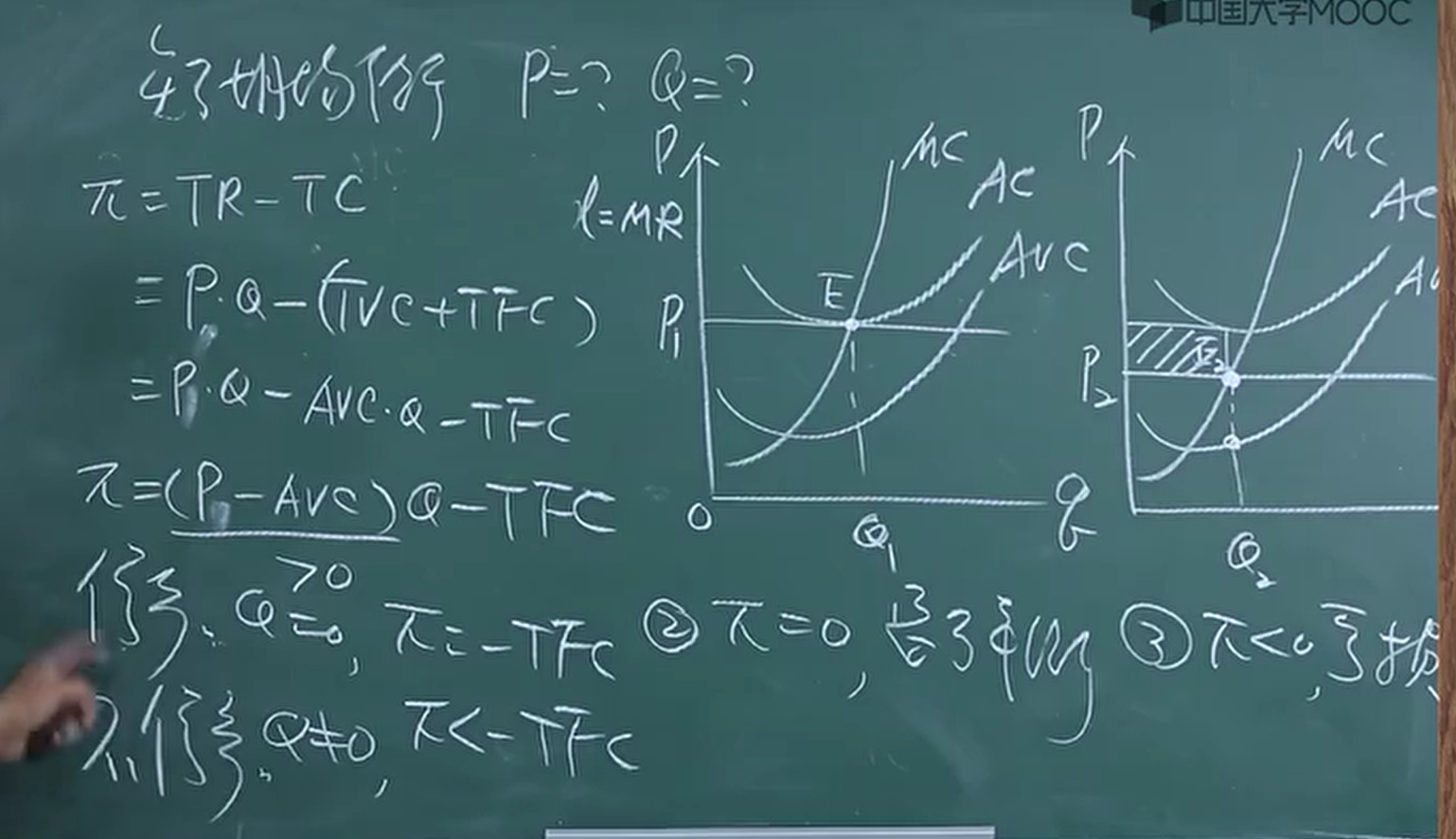
- With scale unchanged, facing a perfectly competitive market, what price and output maximize the firm’s profit?
- Profit
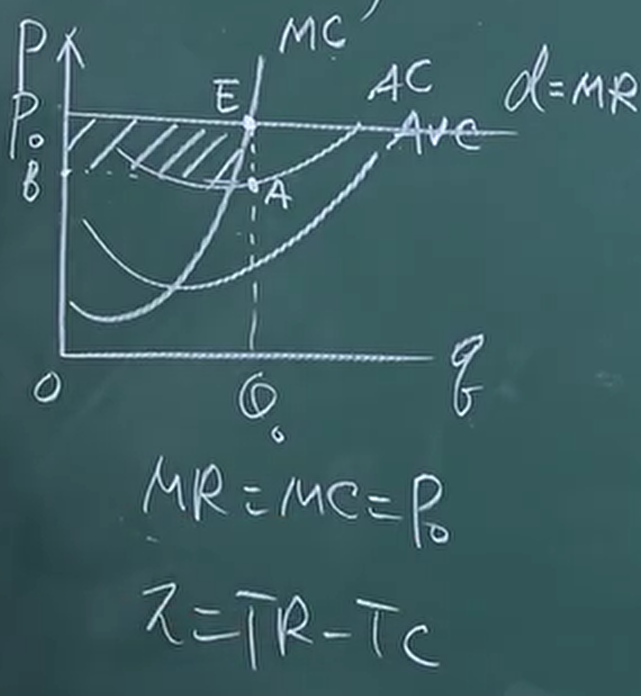
- MC: marginal cost
- AC: average cost
- AVC: average variable cost
- Break-even
- Loss
- Continue producing
- Shut down
- Continue producing
2.5. Long-Run Equilibrium
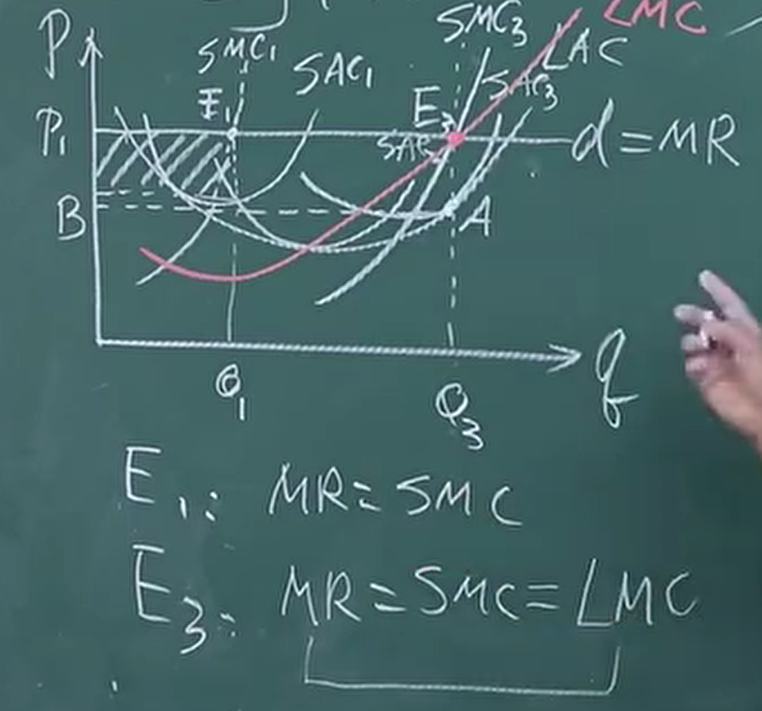
- Firm equilibrium
- Industry equilibrium
- The optimal output at the optimal scale is the result reached by long-run industry equilibrium.
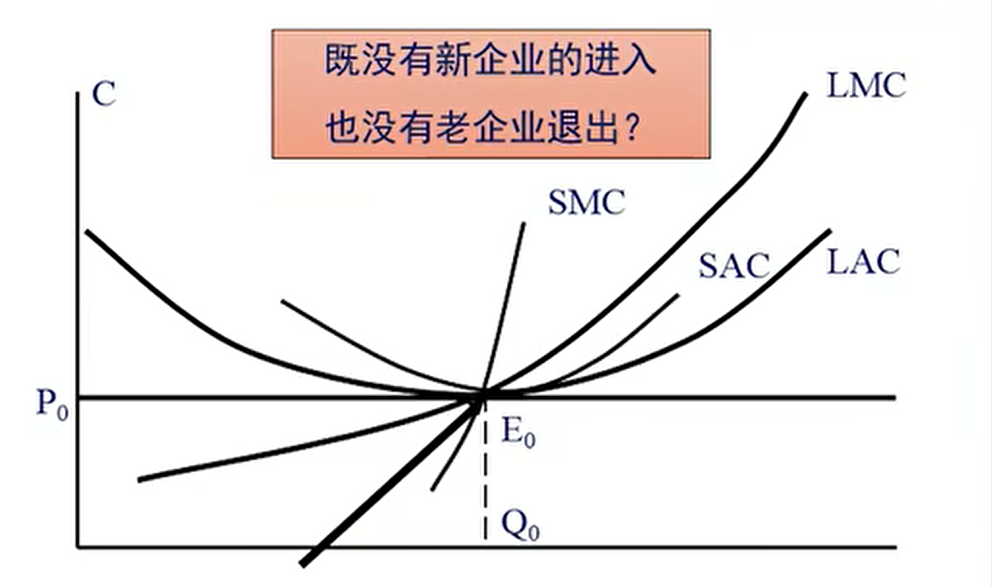
- Firm equilibrium vs. industry equilibrium
- An individual firm can be in equilibrium without the industry being in equilibrium; when the industry is in equilibrium, firms throughout the industry are in equilibrium.
3. Monopoly
3.1. Three Conditions
3.1.1. Only One Firm
3.1.2. No Close Substitute
3.1.3. Other Firms Cannot Enter
- Government franchise
- Control of materials
- Technology monopoly
- Unfair competition
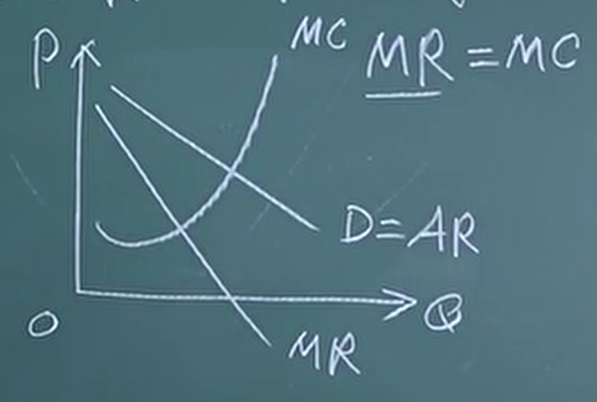
3.2. Demand Curve
3.3. Price Discrimination
3.3.1. What It Is
- Segmenting the same product according to different market conditions and charging differentiated prices.
3.3.2. Types
- Three types according to the degree to which consumer surplus is extracted.
3.3.2.1. First-Degree Price Discrimination
- Price each unit separately.
3.3.2.2. Second-Degree Price Discrimination
- Price different blocks/quantities of the product separately.
3.3.2.3. Third-Degree Price Discrimination
- Charge different prices for the product in different markets.
4. Monopolistic Competition
4.1. Four Conditions
4.1.1. Many Firms
4.1.2. Close Substitutes
- Leads to product differentiation
- Competition is intense.
4.1.3. Other Firms Can Enter and Exit Freely
5. Oligopoly
- Only a few large firms.
- Firms affect one another.
- They may reach agreements.
- Prices are relatively stable.