NOTE
1.2 reflection
1. 反射是什么 修改代码- 编译- 运行 正常来说我们要修改代码只能在编译前,反射能让我们在运行时修改代码 2. Golang如何实现反射 interface 当向interface变量赋予一个实体类型的时候,interface会存储实体的类型信息,反射就是通过interface的类型信息实现的
这是历史学习笔记,可能存在过时或不完整的理解。
1. 反射是什么
修改代码->编译->运行 正常来说我们要修改代码只能在编译前,反射能让我们在运行时修改代码
2. Golang如何实现反射
interface 当向interface变量赋予一个实体类型的时候,interface会存储实体的类型信息,反射就是通过interface的类型信息实现的 interface.md
3. Type和Value
3.1. reflect包定义了(Type,Value)Pair
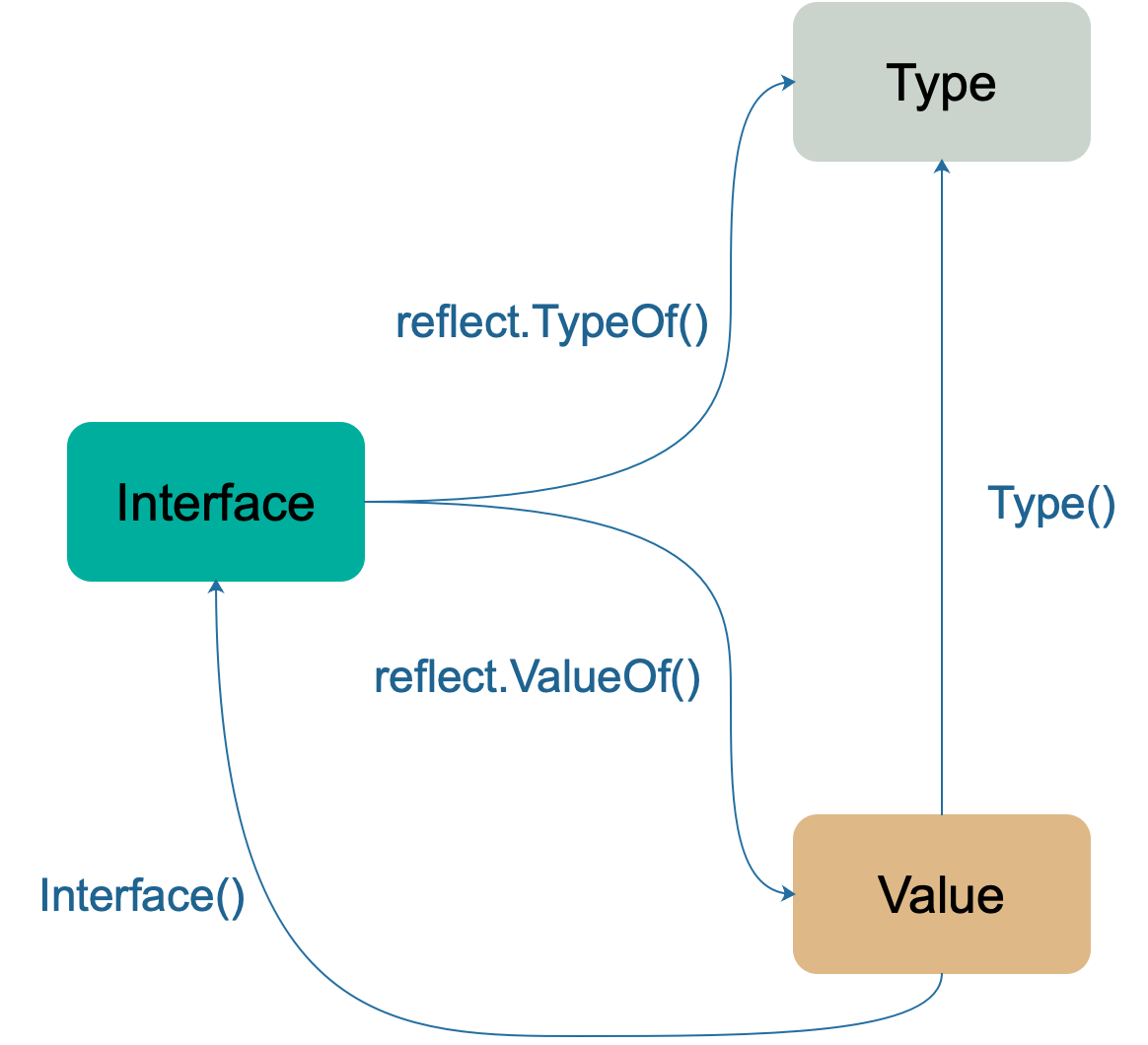
3.2. 通过reflect.TypeOf获取Type
和_type (动态类型)关联比较紧密
type emptyInterface struct {
	typ  *rtype//动态类型
	word unsafe.Pointer
}

func TypeOf(i interface{}) Type {
    //emptyInterface可以看作eface。eface在runtime包,而emptyInterface在reflect包
	eface := *(*emptyInterface)(unsafe.Pointer(&i))
	//传入动态类型
	return toType(eface.typ)
}

//没做什么,就是返回动态类型
func toType(t *rtype) Type {
	if t == nil {
		return nil
	}
	return t


type Type interface {
    // 所有的类型都可以调用下面这些函数

	// 此类型的变量对齐后所占用的字节数
	Align() int

	// 如果是 struct 的字段,对齐后占用的字节数
	FieldAlign() int

	// 返回类型方法集里的第 `i` (传入的参数)个方法
	Method(int) Method

	// 通过名称获取方法
	MethodByName(string) (Method, bool)

	// 获取类型方法集里导出的方法个数
	NumMethod() int

	// 类型名称
	Name() string

	// 返回类型所在的路径,如:encoding/base64
	PkgPath() string

	// 返回类型的大小,和 unsafe.Sizeof 功能类似
	Size() uintptr

	// 返回类型的字符串表示形式
	String() string

	// 返回类型的类型值
	Kind() Kind

	// 类型是否实现了接口 u
	Implements(u Type) bool

	// 是否可以赋值给 u
	AssignableTo(u Type) bool

	// 是否可以类型转换成 u
	ConvertibleTo(u Type) bool

	// 类型是否可以比较
	Comparable() bool

	// 下面这些函数只有特定类型可以调用
	// 如:Key, Elem 两个方法就只能是 Map 类型才能调用

	// 类型所占据的位数
	Bits() int

	// 返回通道的方向,只能是 chan 类型调用
	ChanDir() ChanDir

	// 返回类型是否是可变参数,只能是 func 类型调用
	// 比如 t 是类型 func(x int, y ... float64)
	// 那么 t.IsVariadic() == true
	IsVariadic() bool

	// 返回内部子元素类型,只能由类型 Array, Chan, Map, Ptr, or Slice 调用
	Elem() Type

	// 返回结构体类型的第 i 个字段,只能是结构体类型调用
	// 如果 i 超过了总字段数,就会 panic
	Field(i int) StructField

	// 返回嵌套的结构体的字段
	FieldByIndex(index []int) StructField

	// 通过字段名称获取字段
	FieldByName(name string) (StructField, bool)

	// FieldByNameFunc returns the struct field with a name
	// 返回名称符合 func 函数的字段
	FieldByNameFunc(match func(string) bool) (StructField, bool)

	// 获取函数类型的第 i 个参数的类型
	In(i int) Type

	// 返回 map 的 key 类型,只能由类型 map 调用
	Key() Type

	// 返回 Array 的长度,只能由类型 Array 调用
	Len() int

	// 返回类型字段的数量,只能由类型 Struct 调用
	NumField() int

	// 返回函数类型的输入参数个数
	NumIn() int

	// 返回函数类型的返回值个数
	NumOut() int

	// 返回函数类型的第 i 个值的类型
	Out(i int) Type

    // 返回类型结构体的相同部分
	common() *rtype

	// 返回类型结构体的不同部分
	uncommon() *uncommonType
}}
3.3. 通过reflect.ValueOf获取Value
结合 _type (动态类型)和 data (动态值)两者
func ValueOf(i interface{}) Value {
	if i == nil {
		return Value{}
	}

   // ……
	return unpackEface(i)
}

// 分解 eface
func unpackEface(i interface{}) Value {
    //将 i 转换成 *emptyInterface 类型
	e := (*emptyInterface)(unsafe.Pointer(&i))

	t := e.typ
	if t == nil {
		return Value{}
	}

	//将它的 typ 字段和 word 字段以及一个标志位字段组装成一个 Value 结构体
	f := flag(t.Kind())
	if ifaceIndir(t) {
		f |= flagIndir
	}
	return Value{t, e.word, f}
}

//Value结构体

// 设置切片的 len 字段,如果类型不是切片,就会panic
 func (v Value) SetLen(n int)

 // 设置切片的 cap 字段
 func (v Value) SetCap(n int)

 // 设置字典的 kv
 func (v Value) SetMapIndex(key, val Value)

 // 返回切片、字符串、数组的索引 i 处的值
 func (v Value) Index(i int) Value

 // 根据名称获取结构体的内部字段值
 func (v Value) FieldByName(name string) Value

// 用来获取 int 类型的值
func (v Value) Int() int64

// 用来获取结构体字段(成员)数量
func (v Value) NumField() int

// 尝试向通道发送数据(不会阻塞)
func (v Value) TrySend(x reflect.Value) bool

// 通过参数列表 in 调用 v 值所代表的函数(或方法
func (v Value) Call(in []Value) (r []Value)

// 调用变参长度可变的函数
func (v Value) CallSlice(in []Value) []Value
3.4. 通过Value.Kind获取的是内置类型
type Student struct {
}

//TypeOf返回的是Student
//Kind返回的是struct
3.5. 通过Value.Interface()获取interface{}
func testStrType(v interface{}) {
	if str, ok := v.(string); ok {
		fmt.Println(str)
	}
}

func testType(t interface{}) {
	switch t.(type) {
	case int:
		fmt.Println("int类型")
	case *factory.Stu:
		fmt.Println("Stu类型")
		stu := t.(*factory.Stu)
		//stu := *factory.Stu(t)
		stu.TestPrintName()
	case factory.Learner:
		fmt.Println("Learner类型")
		learner := t.(factory.Learner)
		learner.Learn()
	}
}
3.6. 通过Value.Elem修改属性值
反射可以用来修改一个变量的值,前提是这个值可以被修改。
4. API
go - Why is IsValid() returning true for the zero value of an int? - Stack Overflow
5. 参考
- reflection - How do you create a new instance of a struct from its type at run time in Go? - Stack Overflow
- go - cannot convert data (type interface {}) to type string: need type assertion - Stack Overflow
- The Laws of Reflection - The Go Blog
- 一看就懂系列之Golang的反射_golang_咖啡色的羊驼-CSDN博客
- 深度解密Go语言之反射 | qcrao