
NOTE
1.4 Encryption
Symmetric encryption, block modes, asymmetric encryption, RSA, and basic implementation.
This is a historical learning note and may contain outdated or incomplete understanding.
1. What Is Encryption
Encryption transforms plaintext into ciphertext so that unauthorized parties cannot directly read the content.
2. Encryption Property
Confidentiality.
3. Three Elements of Encryption
3.1. Encryption
- Plaintext
- Key
- Encryption algorithm
3.2. Decryption
- Ciphertext
- Key
- Decryption algorithm; depending on the cryptosystem, this may differ from the encryption operation.
4. Categories of Encryption Algorithms
4.1. Symmetric Encryption
4.1.1. What It Is
- Both parties share the same secret key.
- Advantage: high encryption/decryption performance.
- Limitation: the shared key must be distributed and stored securely.
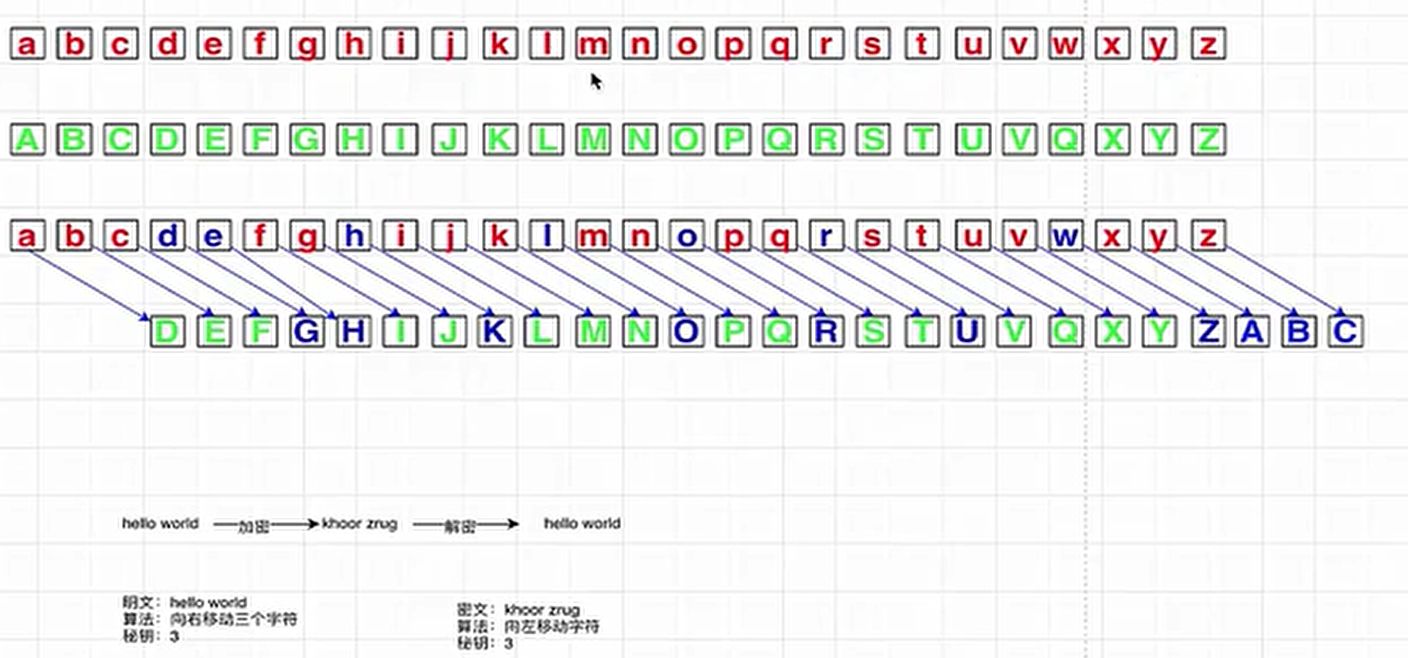
4.1.2. Caesar Cipher
4.1.3. DES
DES is no longer appropriate for modern security use.
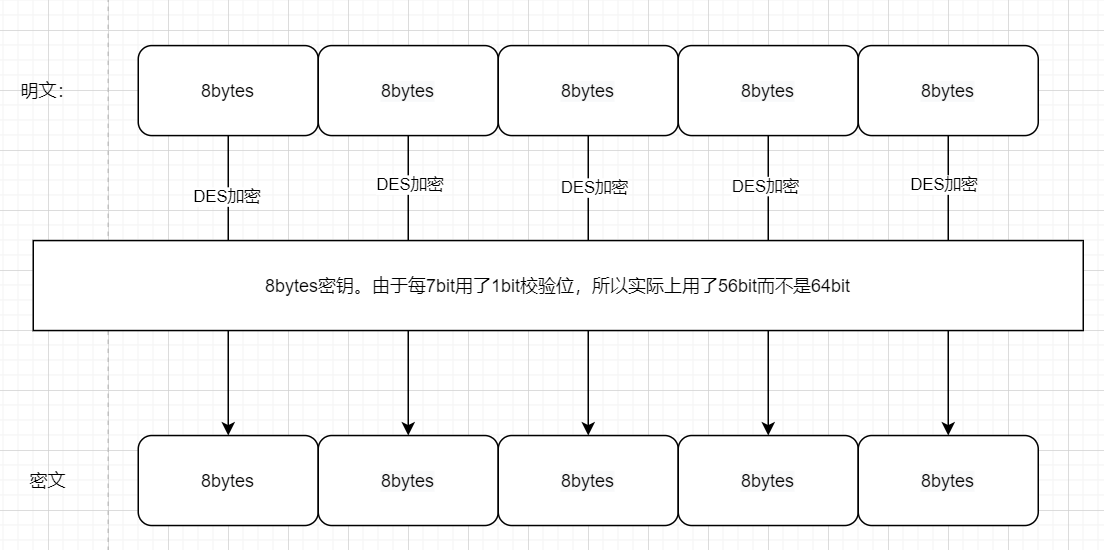
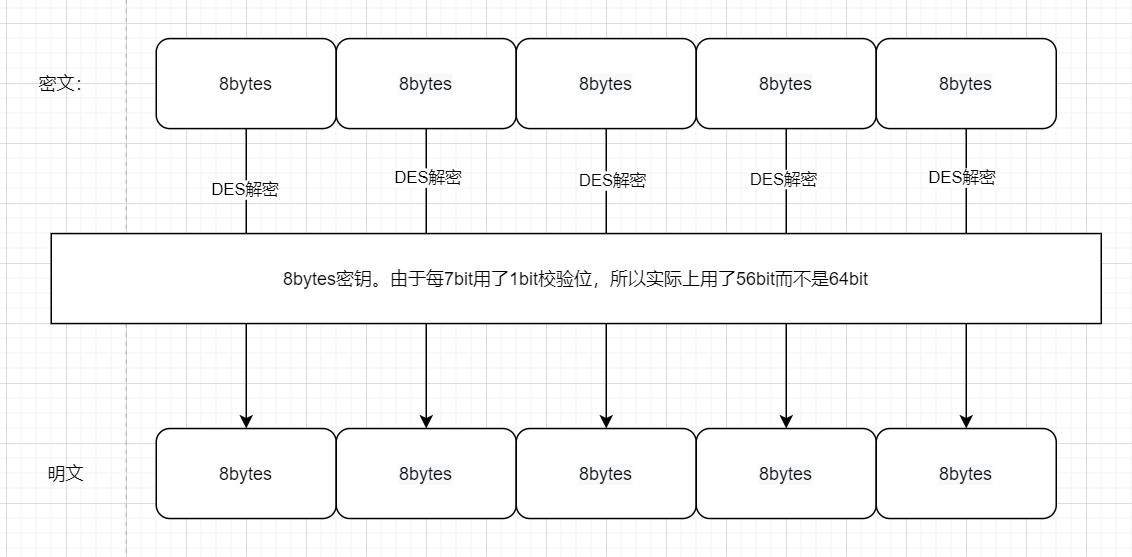
- Key: historically represented as 8 bytes including parity bits.
- Block size: 8 bytes.
4.1.4. 3DES
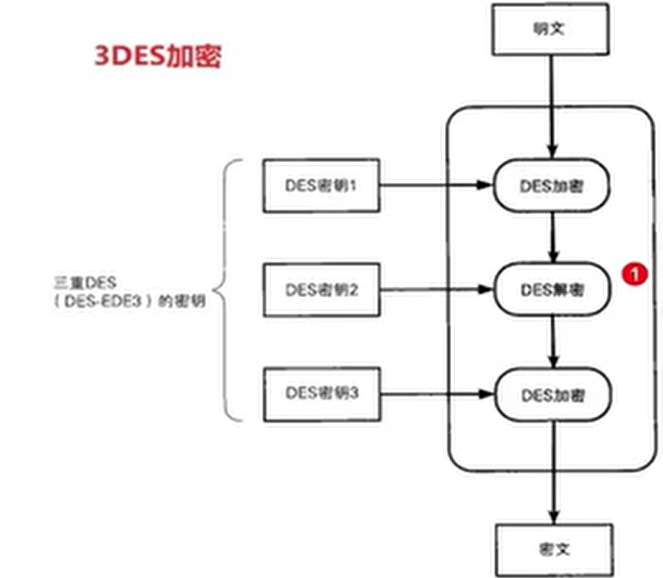
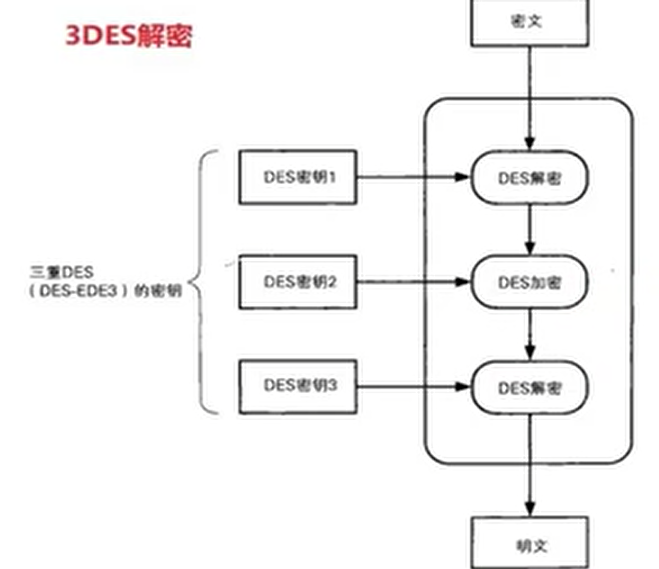
Triple DES applies DES operations multiple times and was designed partly for backward compatibility. New systems should not prefer 3DES.
- It uses multiple DES keys.
- Block size remains 8 bytes.
4.1.5. AES
AES is the modern block cipher to prefer in this group of algorithms.
- Key sizes: 16, 24, or 32 bytes.
- Block size: 16 bytes.
- In new systems, use a suitable authenticated-encryption mode such as GCM where possible, or otherwise provide separate integrity protection.
4.2. Block Cipher Modes
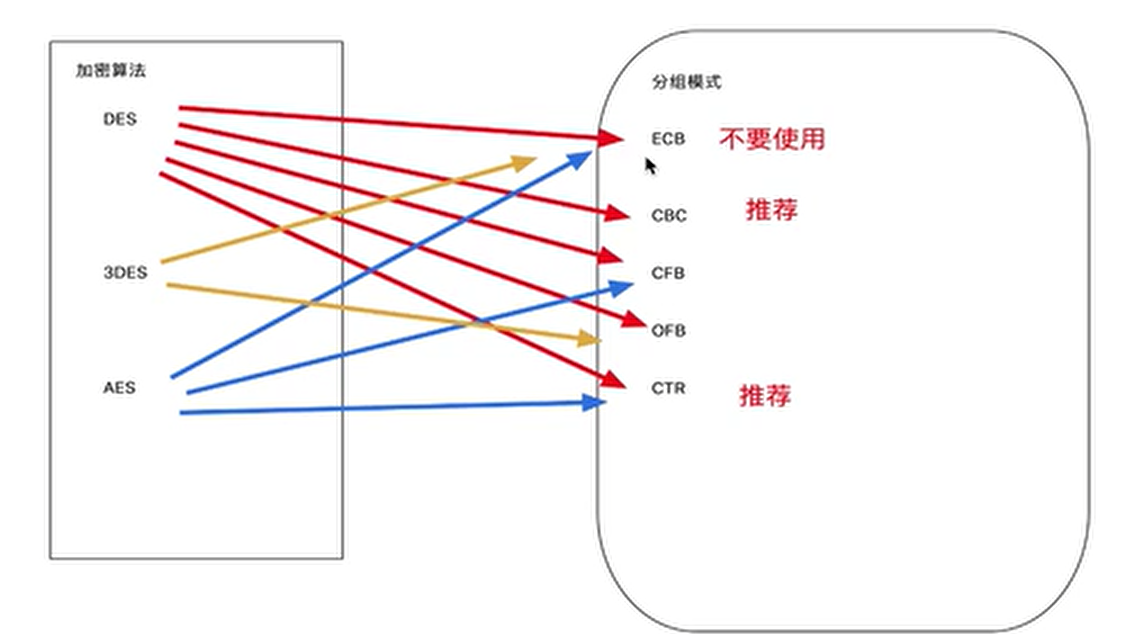
DES, 3DES, and AES are block ciphers. A mode of operation defines how to process data longer than one block.
4.2.1. Relationship Between Blocks and Symmetric Encryption
4.2.2. ECB
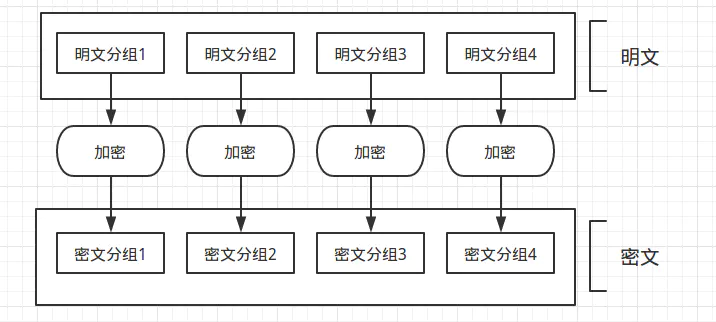
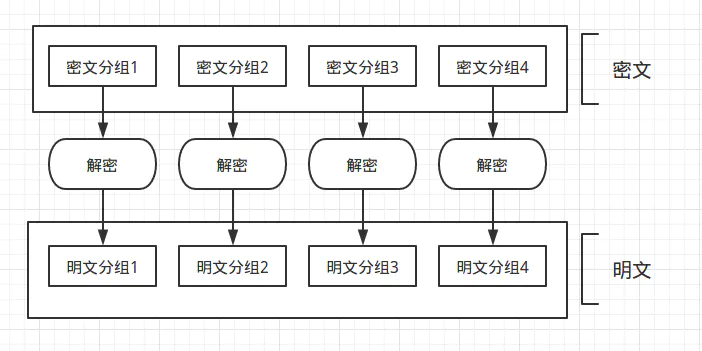
- Operates independently on blocks.
- Padding is required when plaintext length is not aligned to the block size.
- Identical plaintext blocks produce identical ciphertext blocks, so ECB leaks patterns and should not be used for ordinary confidential messages.
- Blocks can be processed in parallel.
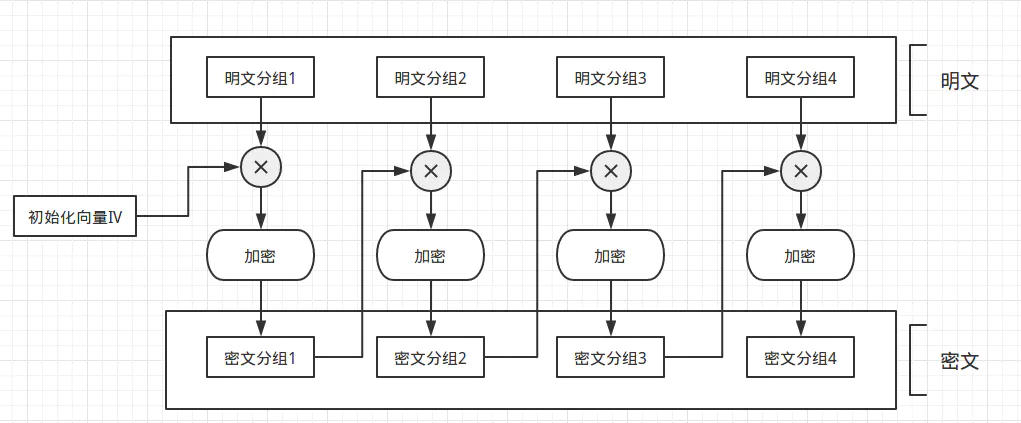
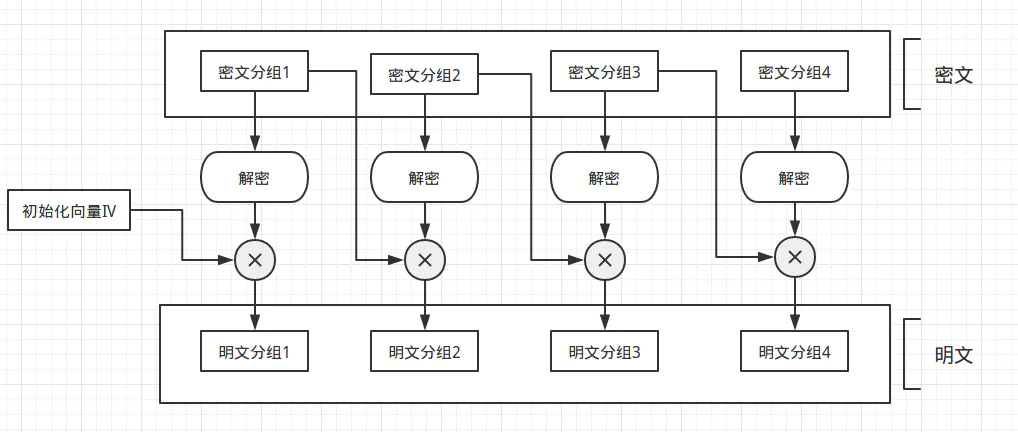
4.2.3. CBC
- Uses a block-sized initialization vector.
- Plaintext usually requires padding.
- Each ciphertext block influences the next encryption step.
- Encryption is sequential; decryption can be parallelized by block once ciphertext is available.
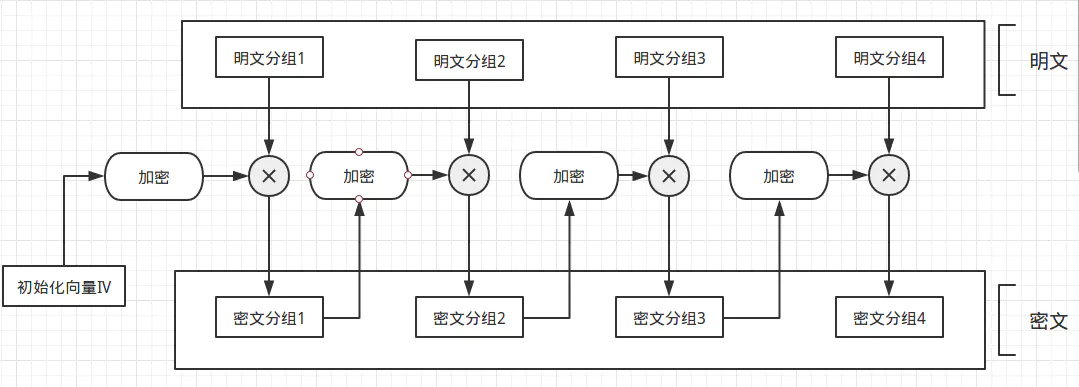
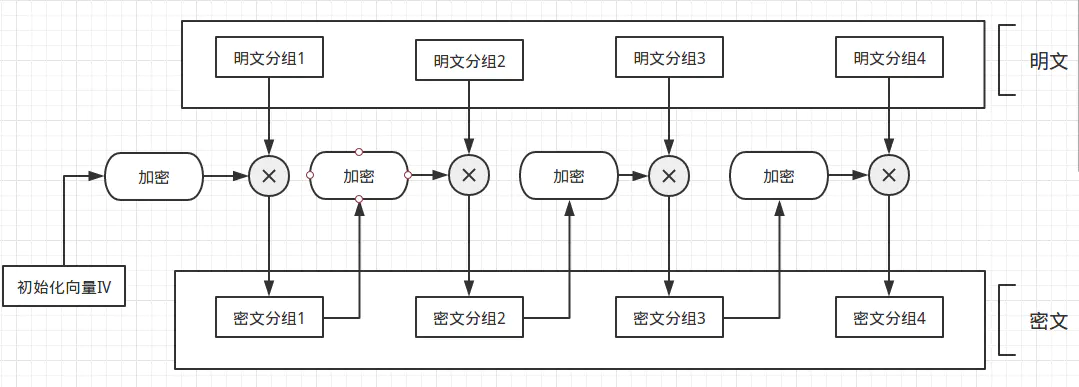
4.2.4. CFB
- Converts a block cipher into a stream-like mode.
- Does not require padding in the same way as CBC.
- Requires an IV.
- Decryption can be parallelized in common forms; encryption depends on prior output.
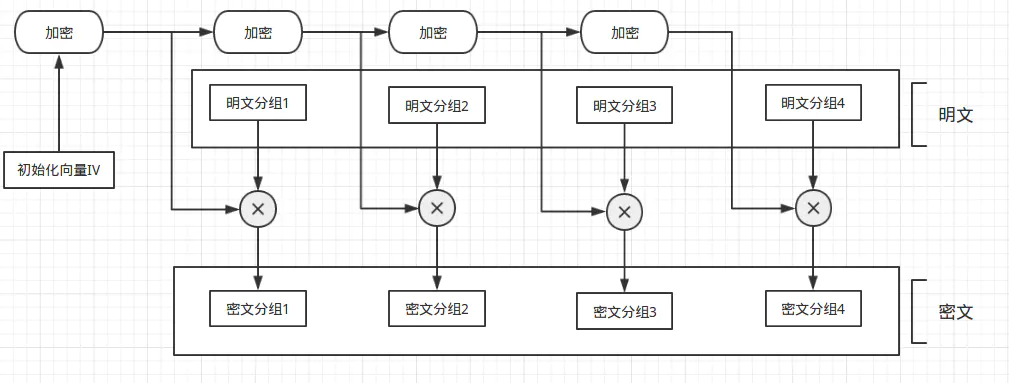
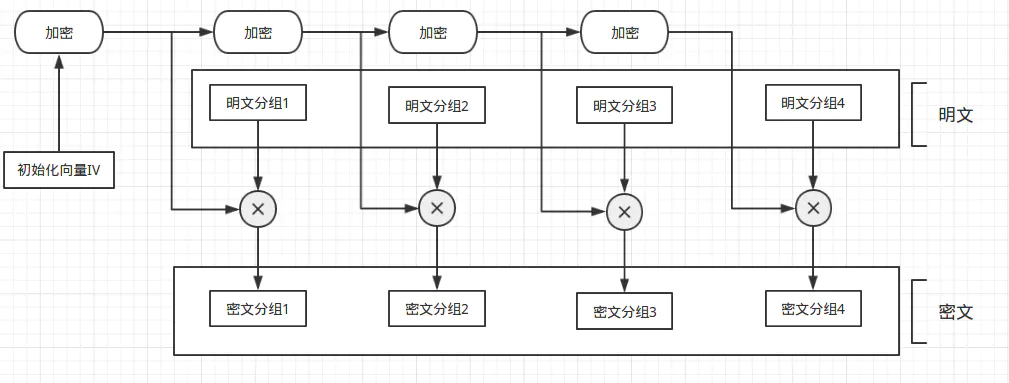
4.2.5. OFB
- Generates a keystream by repeatedly encrypting internal state derived from the IV.
- Does not require padding in the same way as block-by-block modes.
4.2.6. CTR
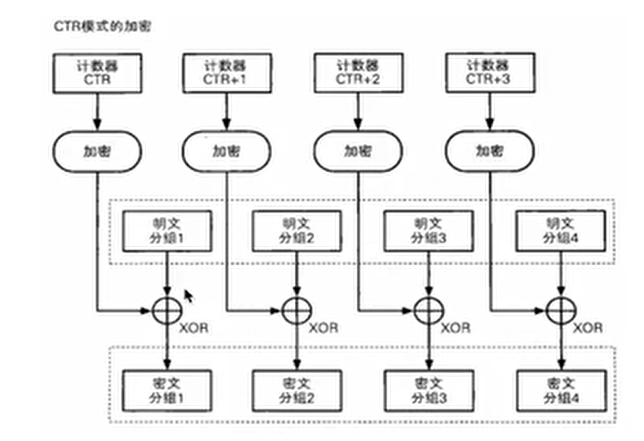
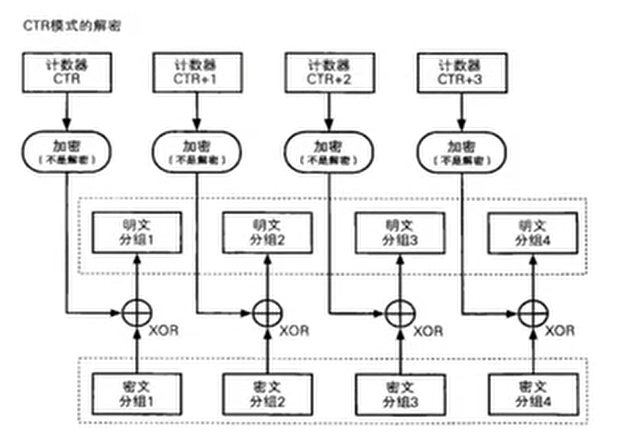
- Encrypts successive counter values to produce a keystream.
- Does not require padding.
- Encryption and decryption can be parallelized.
- The nonce/counter input must never repeat under the same key.
4.3. Asymmetric Encryption
4.3.1. What It Is
- A key pair contains a public key and a private key. The public key can be shared; the private key must remain secret.
- Signing and verification: sign with the private key and verify with the public key.
- Encryption and decryption: for RSA encryption, encrypt with the recipient’s public key and decrypt with its private key.
- Limitation: public-key operations are much slower than symmetric cryptography.
- Advantage: the private key does not have to be transmitted to parties that use the public key.

4.3.2. RSA Algorithm
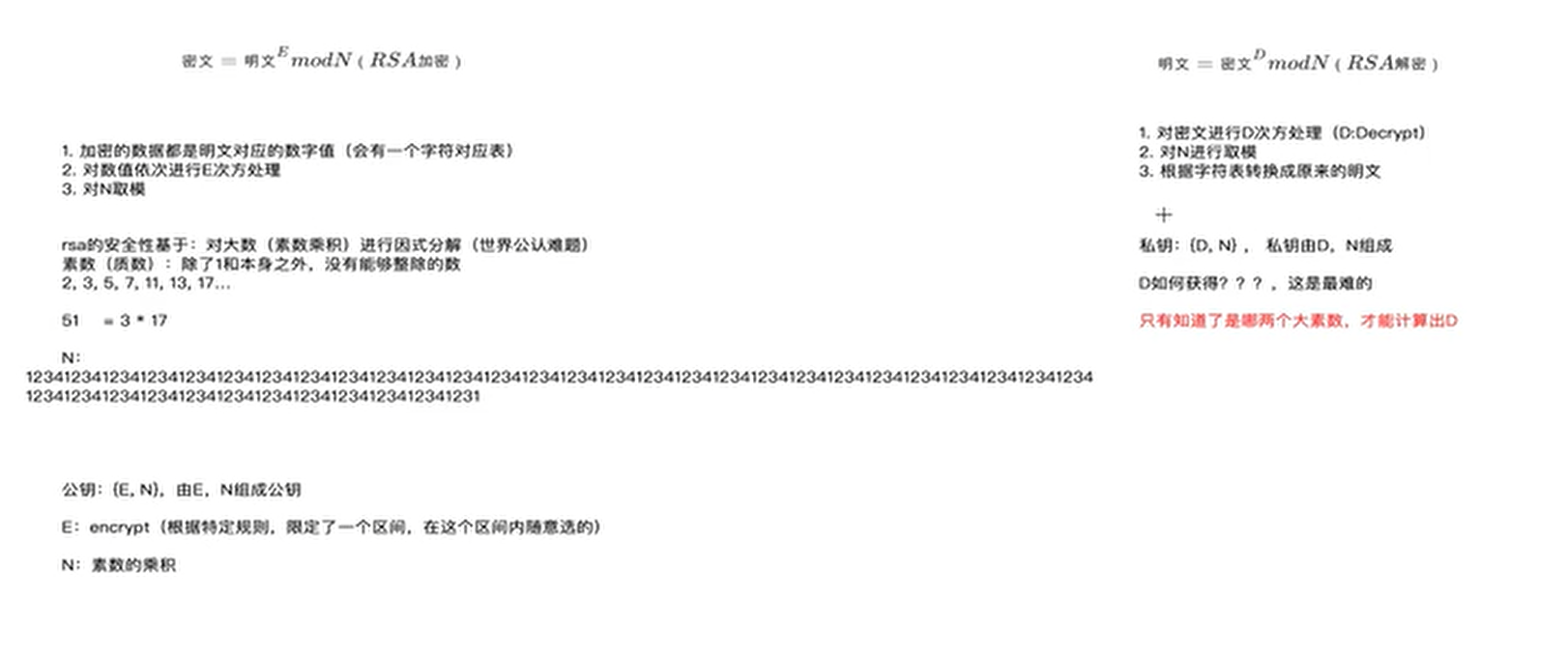
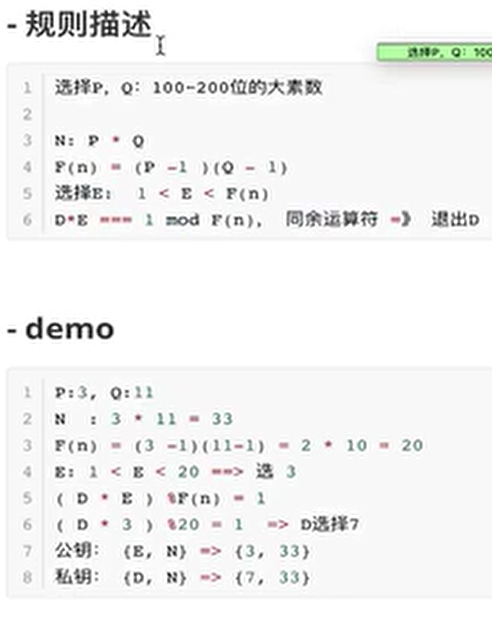
4.3.3. Mathematical Idea
- Choose two large primes
pandq. - Compute
N = p * q. - Compute Euler’s totient
φ(N) = (p-1)(q-1)for distinct primes. - Choose a public exponent
ethat is coprime withφ(N). - Compute the private exponent
dsuch thate*d ≡ 1 (mod φ(N)). - The public key contains
(N, e)and the private key includesdtogether with the required private parameters.
4.3.4. Working Process
For textbook RSA, encryption and decryption are modular exponentiation operations. Real applications must use standardized padding/encoding schemes such as OAEP for encryption and PSS for signatures rather than raw textbook RSA.
4.3.4.1. Euler’s Totient
The correctness of RSA follows from modular arithmetic and Euler/Fermat-style number-theoretic results under the required conditions.
5. Implementation
5.1. OpenSSL
# Generate a private key
openssl genpkey -algorithm RSA -pkeyopt rsa_keygen_bits:2048 -out rsa_private_key.pem

# Export the public key
openssl pkey -in rsa_private_key.pem -pubout -out rsa_public_key.pem
5.2. Golang Implementation
5.2.1. AES-CTR
package main

import (
    "crypto/aes"
    "crypto/cipher"
    "crypto/rand"
    "fmt"
    "io"
)

func cryptCTR(key, iv, input []byte) ([]byte, error) {
    block, err := aes.NewCipher(key)
    if err != nil {
        return nil, err
    }
    output := make([]byte, len(input))
    cipher.NewCTR(block, iv).XORKeyStream(output, input)
    return output, nil
}

func main() {
    key := make([]byte, 32)
    if _, err := io.ReadFull(rand.Reader, key); err != nil { panic(err) }
    iv := make([]byte, aes.BlockSize)
    if _, err := io.ReadFull(rand.Reader, iv); err != nil { panic(err) }

    plaintext := []byte("hello")
    ciphertext, _ := cryptCTR(key, iv, plaintext)
    recovered, _ := cryptCTR(key, iv, ciphertext)
    fmt.Println(string(recovered))
}