
NOTE
2.10 Two-Stage Implementation: TCC
An implementation-oriented summary of application-level Try/Confirm/Cancel transactions and their idempotency and compensation requirements.
This is a historical learning note and may contain outdated or incomplete understanding.
1. TCC as an Application-Level Two-Stage Protocol
TCC separates a business transaction into:
- Try: validate and reserve resources;
- Confirm: finalize the reservation;
- Cancel: release/compensate it.
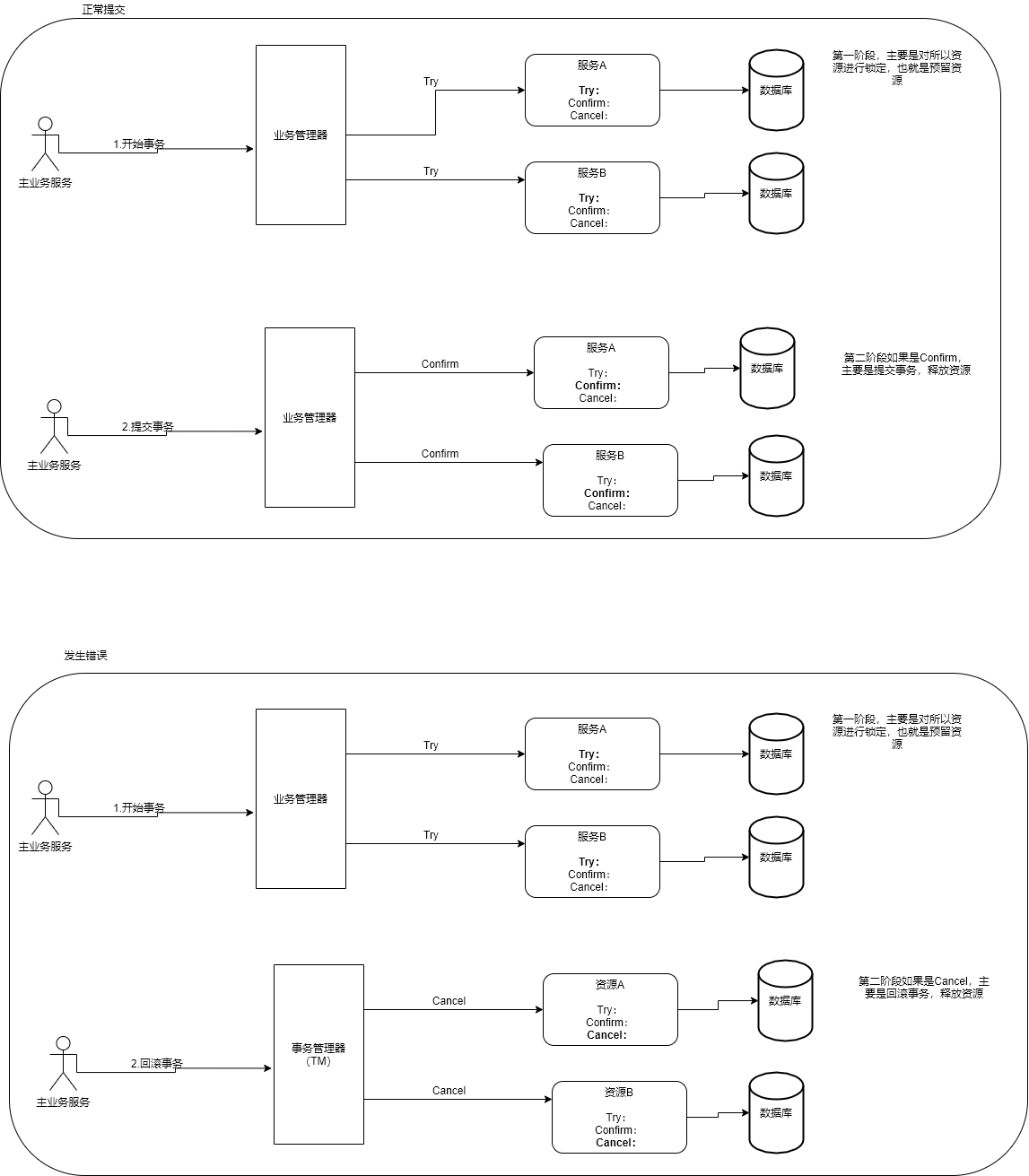
The first stage normally commits its own local transaction after creating the reservation. Confirm or Cancel therefore runs in a later local transaction rather than keeping the first database transaction open.
2. Why Use It?
Compared with database-level 2PC, TCC can coordinate heterogeneous services and avoids holding a database prepare state across the whole workflow.
The cost moves into business code: every participant must define reservation and compensation semantics.
3. Failure Handling
Implementations must expect duplicate and delayed calls. Confirm and Cancel should be idempotent, and the coordinator needs durable state plus retries so a crash does not lose the final decision.
A reserved resource can still expire, become invalid, or encounter operational failure, so implementations need explicit timeout and recovery policy rather than assuming confirmation is infallible.
4. Frameworks
Seata is one framework that supports TCC-style distributed transaction coordination.