
NOTE
2.2 TCC: Try, Confirm, Cancel
Application-level distributed transactions using Try, Confirm, and Cancel operations, including reservations, compensation, retries, idempotency, and business-code cost.
This is a historical learning note and may contain outdated or incomplete understanding.
1. What Is TCC?
TCC is an application-level transaction pattern built around three business operations:
- Try: validate the operation and reserve the required business resources;
- Confirm: finalize the reserved operation;
- Cancel: release or compensate the reservation.
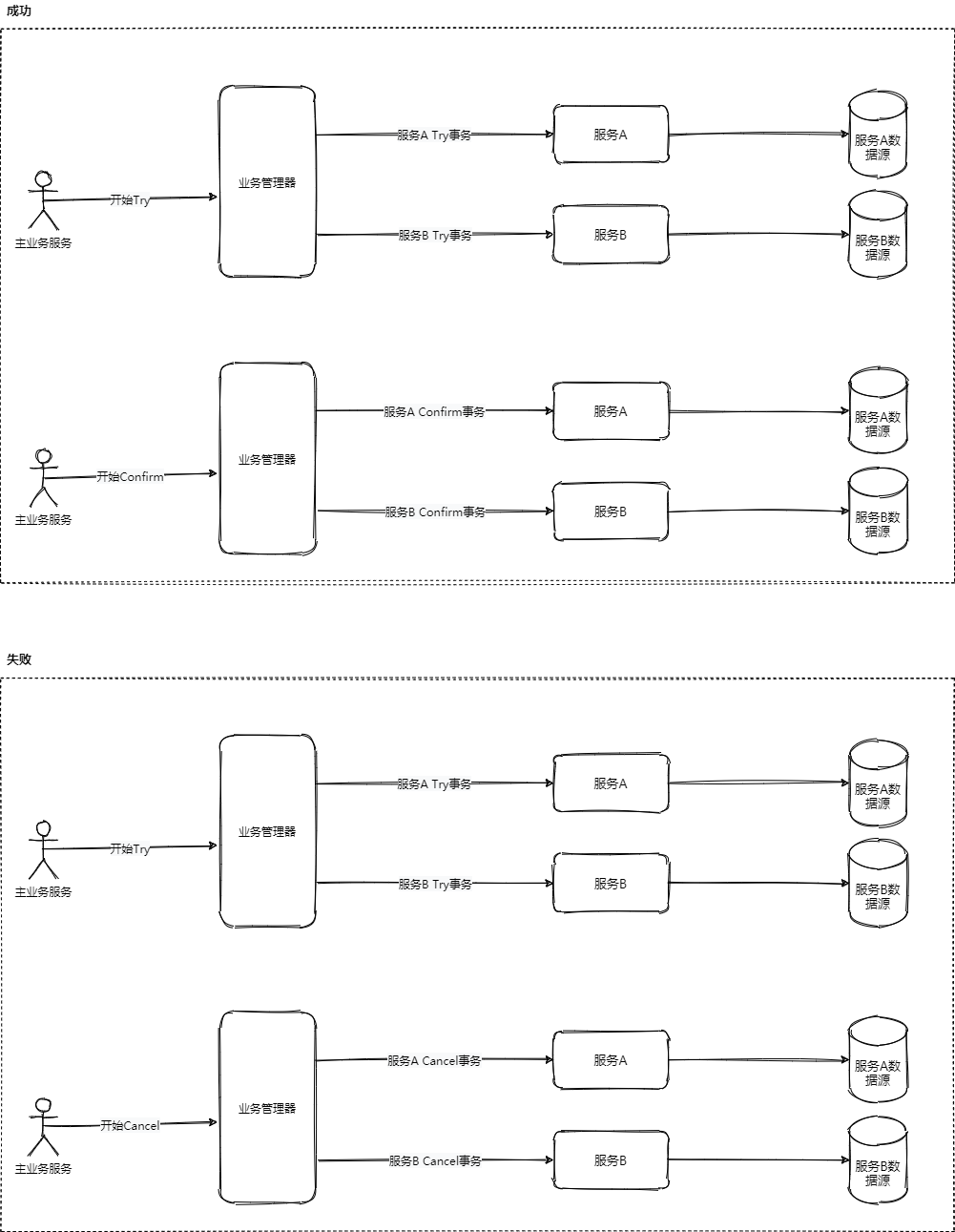
2. Typical Flow
- A coordinator invokes
Tryfor every participant. - If all required
Tryoperations succeed, it drivesConfirm. - If the transaction cannot proceed, it drives
Cancelfor successful reservations. - Confirm/Cancel operations are retried as needed according to durable coordinator state.
3. TCC vs. 2PC
Both have a prepare-like first phase and a final decision, but the abstraction differs:
- 2PC coordinates transactional resource managers that expose prepare/commit/rollback;
- TCC exposes business-level reservation and compensation APIs implemented by the application.
TCC avoids holding one database transaction open across the whole distributed operation, but the reserved business resource may still be unavailable to other operations until Confirm or Cancel.
4. Engineering Requirements
TCC has high code and operational cost. Each participant must handle:
- idempotent Confirm and Cancel;
- duplicate and reordered calls;
- Cancel arriving after a partially completed Try;
- empty rollback/cancel cases;
- durable recovery when the coordinator or participant restarts.
Resource reservation makes successful confirmation more likely, but does not mean Confirm can never encounter operational failures. Recovery still depends on retries and idempotent semantics.
5. Use Cases
TCC fits high-value workflows where the business can explicitly reserve resources and needs tighter control than an asynchronous Saga or message-driven process.